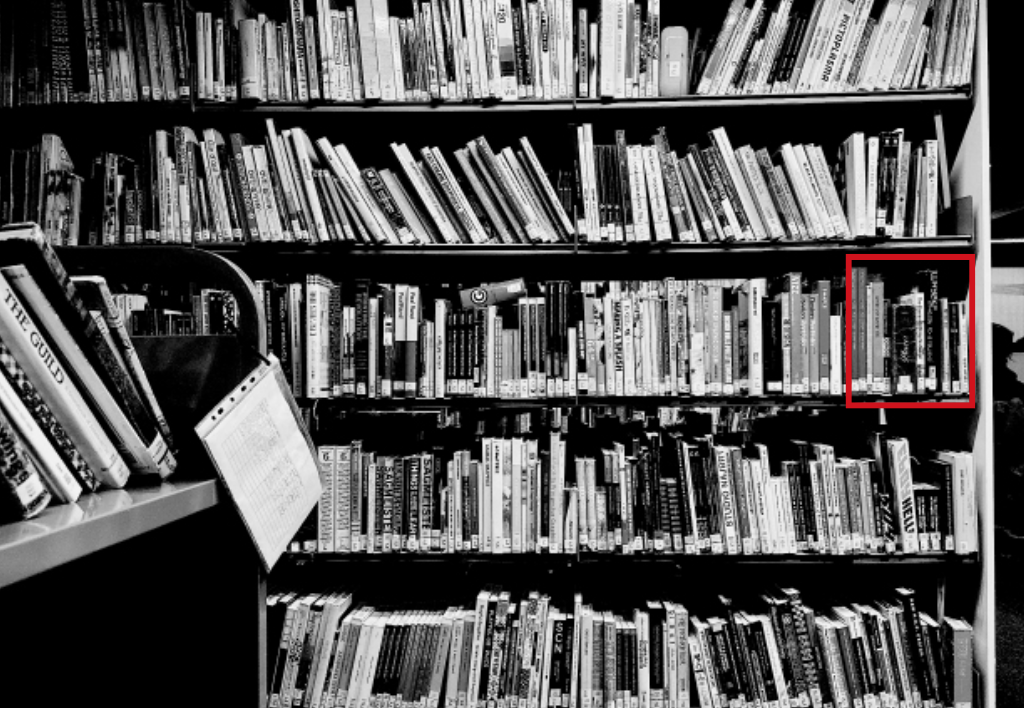
In Brief 2, I selected ten books on graphic design from the 741.6 shelf in the library.
At the outset, I believed that the content of these books dealt with topics such as system reconfiguration, materiality, and syntax. I also considered the library’s unique system of classification and display as a kind of “design system.” Therefore, I aimed to conduct location-based sampling and experimentation to explore how systems and materiality influence the way we acquire knowledge about graphic design.
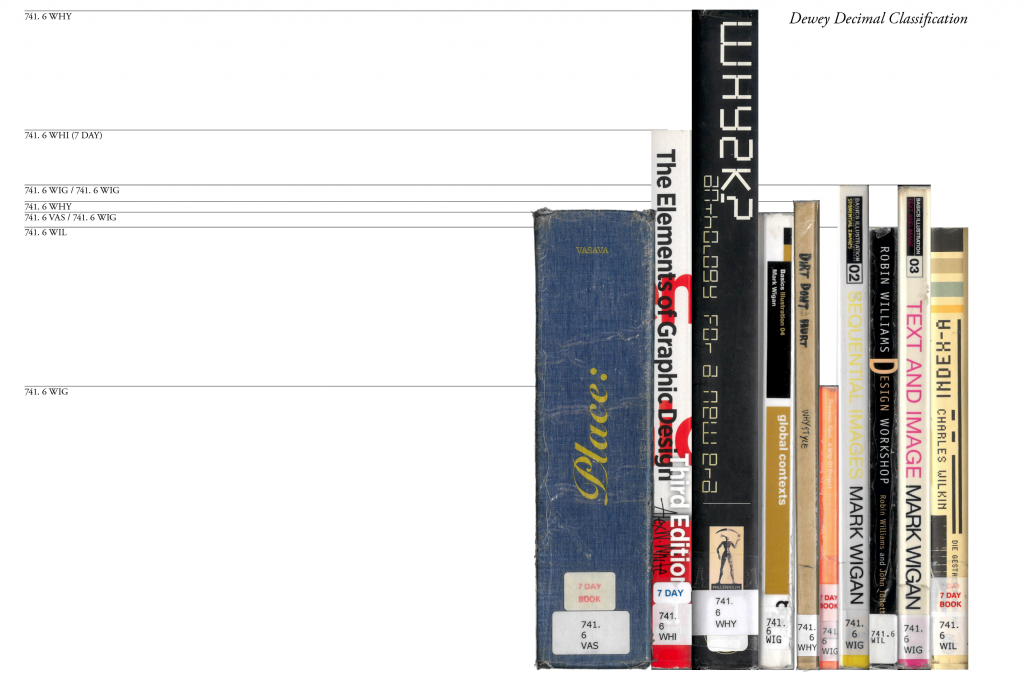
First, I outlined the questions I wanted to focus on and my sampling method. When I began researching this project, I was immediately drawn to the Dewey Decimal numbers on the shelves, which precisely divide each book into specific functional categories and sections. This led me to my first question: how do the system, placement, Dewey numbers, and shelving order determine what we see first?
The Dewey numbers on the shelves
To minimize the influence of personal preferences and subjective interference, I adopted a location-based systematic sampling method: I took the first ten books in sequence from the very front of the bookshelf, following the library’s default reading direction. My intention was for the selection of these books to be objective, fair, and replicable (here, “replicable” means that even if these ten books change, the project can still continue). In this way, “system and location” become the research variables. This approach allows me to capture the actual circulation patterns—such as the frequency of returns and shelving habits—that directly affect the books placed at the front of the shelf.
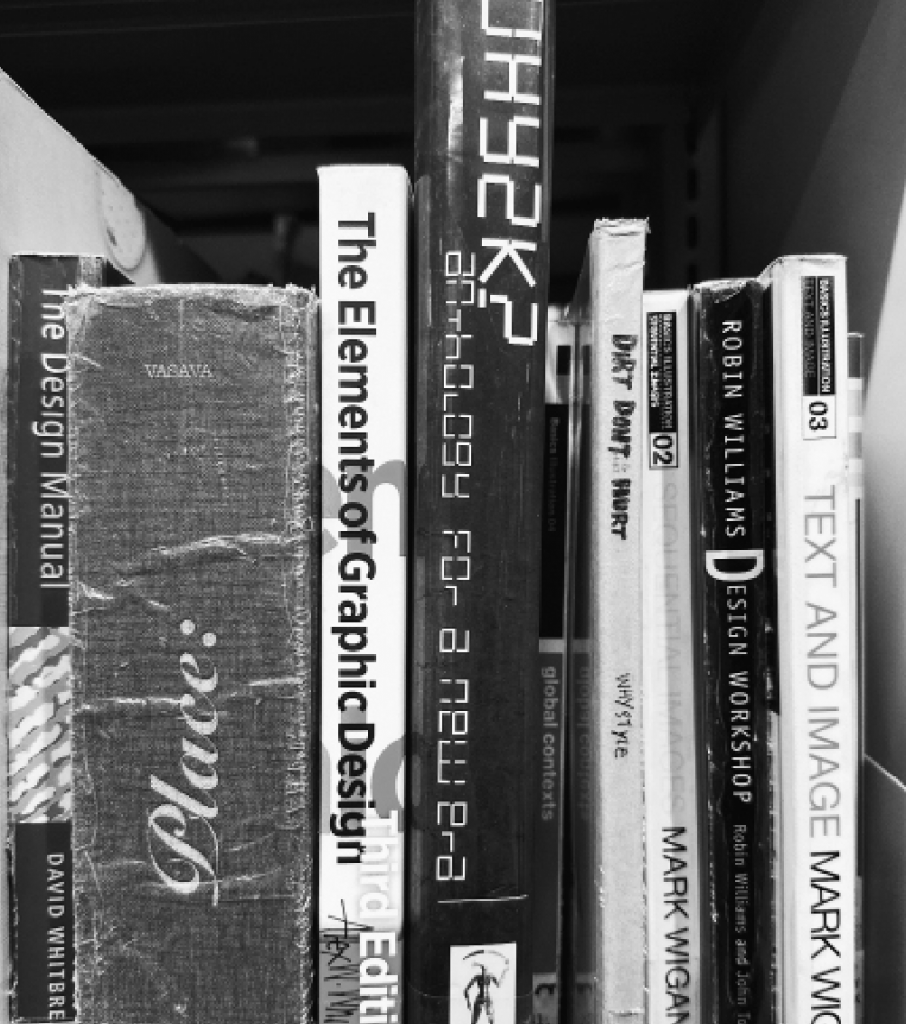
The ten books at the front of the bookshelf
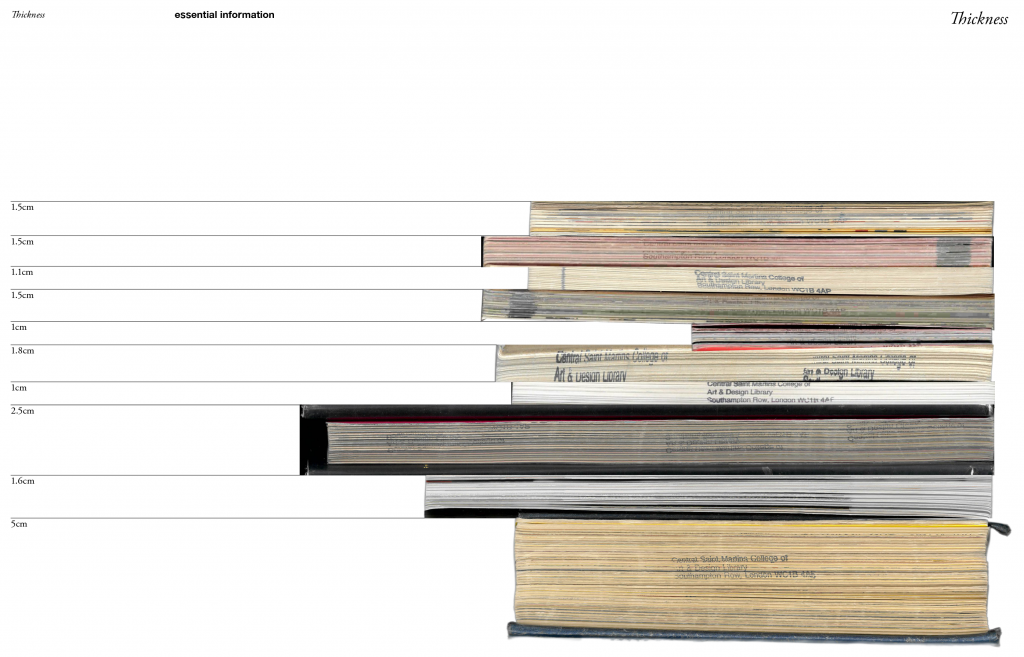
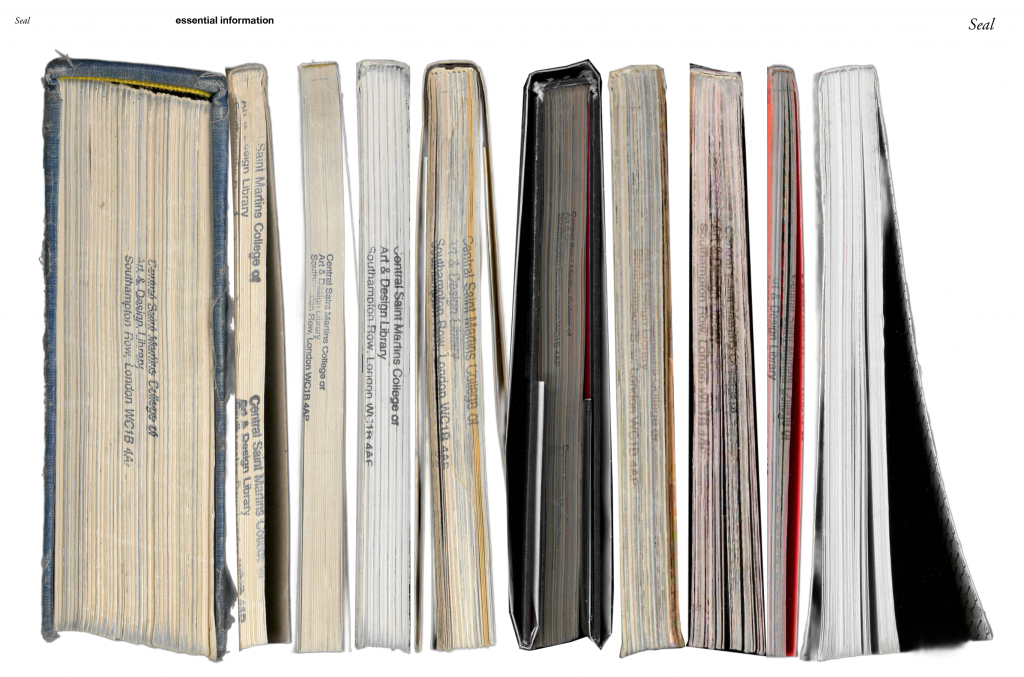
After that, I took photos of the spine of each book (Dewey number/author code/7-DAY label). At the same time, I came up with several simple ways to measure each book: I measured their thickness and took photos of their sides. From the color of these books, we can tell their age and degree of wear, and you can also see that the sides of each book are printed with information related to CSM. This led me to wonder: how do thickness, wear, and the use of labels affect the reading experience and readability?
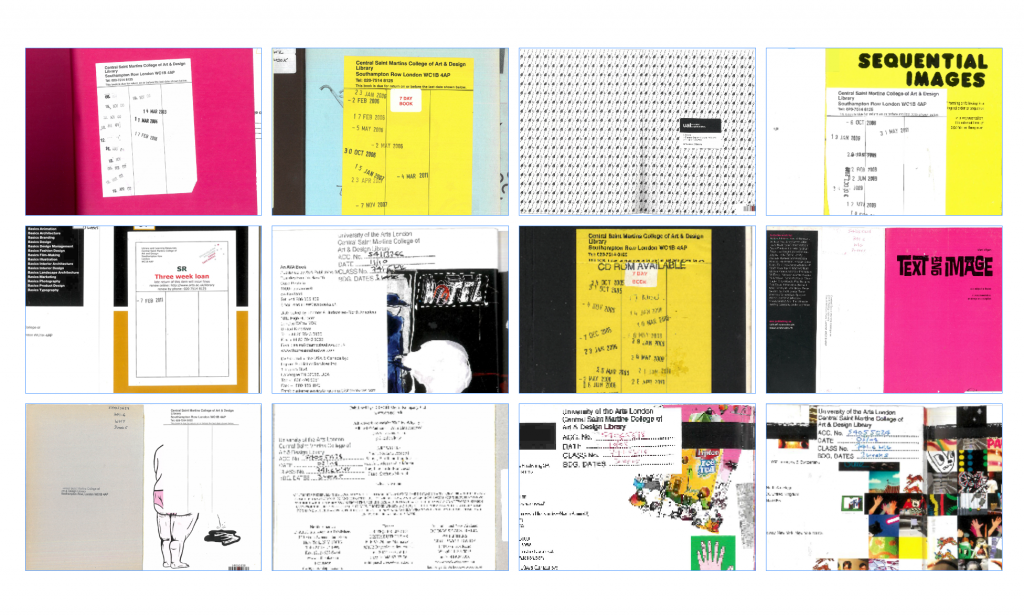
Therefore, I made a more detailed record of this. On the front cover, back cover, and spine of each book, there is information about the CSM Library. At the same time, popular books often show signs of “short-term loans + numerous stickers + spine wear.” This also includes the fact that rough materials combined with a large number of pages indeed increase traces of friction. I found that through the integration of features such as Dewey classification codes, sticker overlays, title obstructions, film reflections, and binding marks, the presence of these traces has quietly transformed what was originally a “book designed by the author” into a “manageable library collection item.”
The presence of these marks and labels subtly alters the original meaning of certain books. For example, in the book “space,” it encompasses not only the category of graphic design but also important aspects of geography and society. However, under the wrapping of tags and various layers of overlays, this information and system together transform the visual priorities and pathways of use. Overall, these “coefficients of friction” collectively provide the original book content with entirely new modes and directions of engagement.
I recorded the friction index of each book’s touched surface to show how physical objects affect the accessibility of knowledgeI recorded the “borrowing record” labels printed on each book
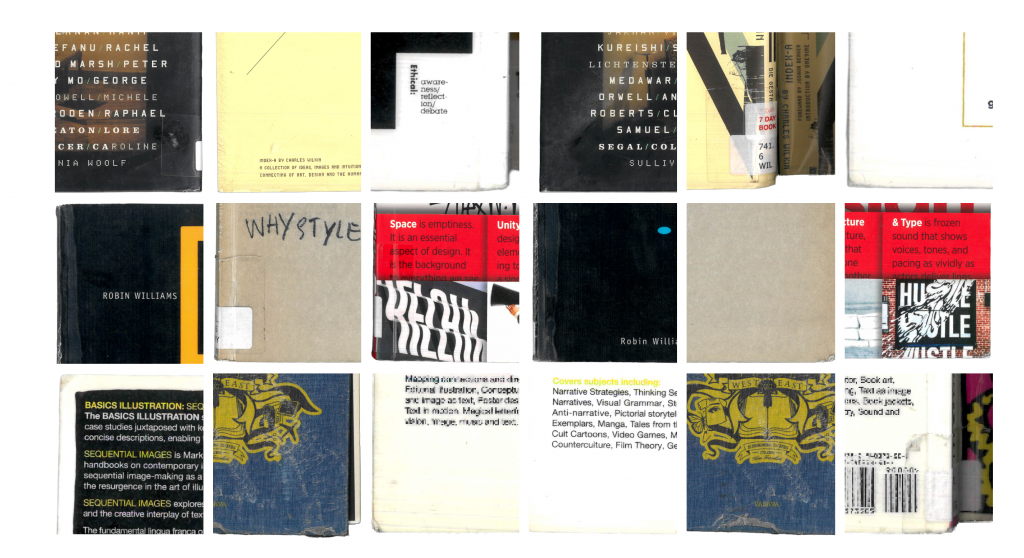
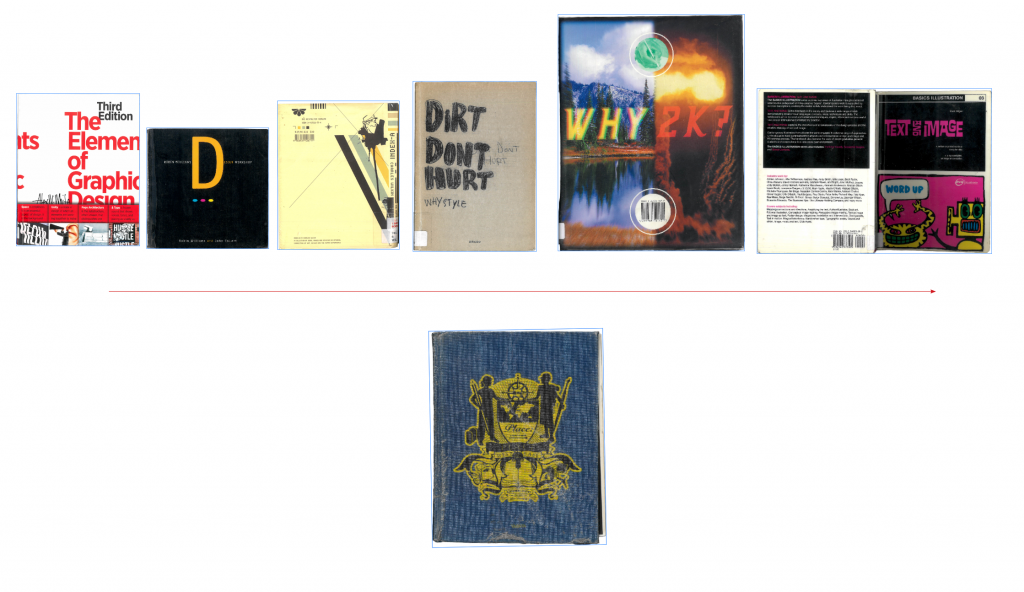
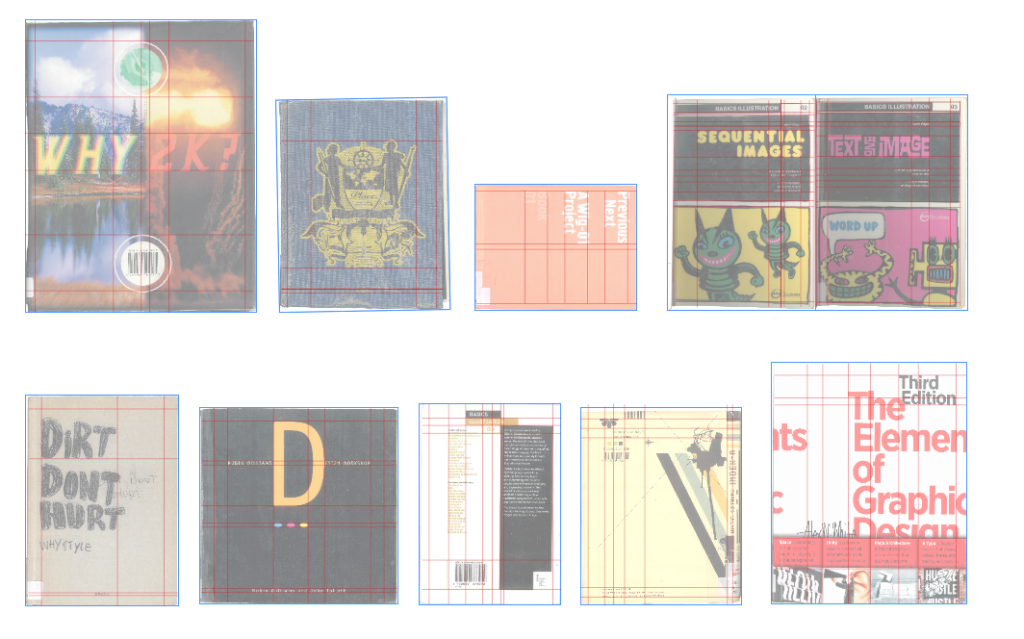
Finally, I want to understand whether the grids, typefaces, and series identifiers on the covers form a stable “family grammar.” Here, we can see how these books have evolved—from classical and quintessential modernist/Swiss-style design, to the aesthetics of the early 21st century, and then into today’s interface-oriented minimalist style. Therefore, I carefully examined the covers of these books and their grid layouts. Most of them are quite rigorous, with highly consistent column spacing, line spacing, and margins. By observing the systems, materiality, and grammar side by side, I attempt to transform the library’s rule of “classification” into an intuitive practice of re-cataloguing.
The development of the aesthetic style of booksThe Grid System of Every Book