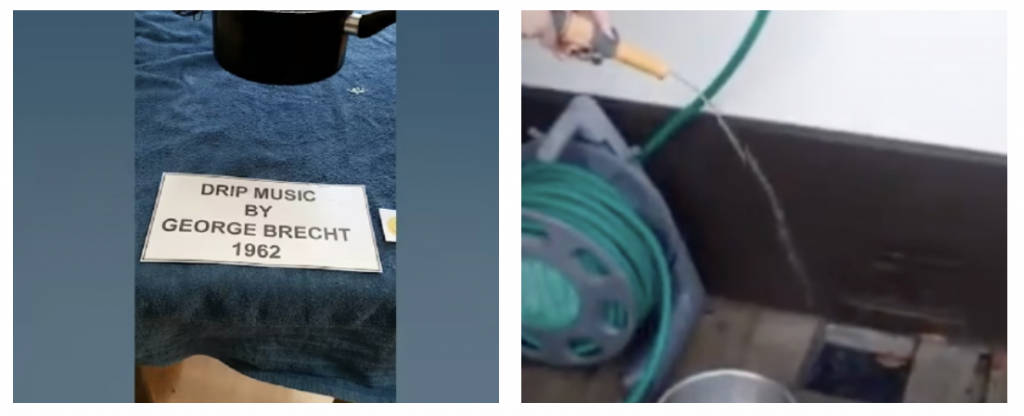
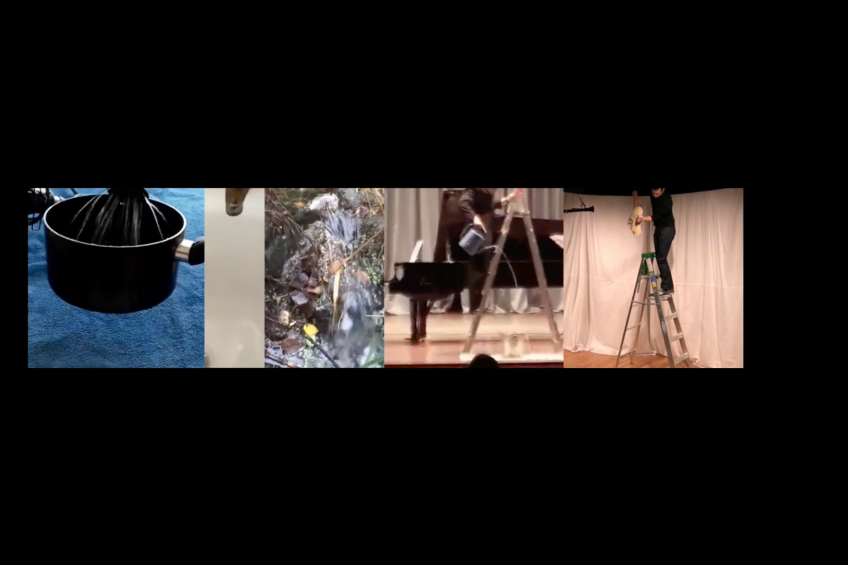
This week, my line of thought fast-forwarded to the present: if you search for “Drip Music” on YouTube, it’s no longer just a simple action—it has become an internet meme, a form of comedy, a kind of entertainment. So, when the “container” is YouTube and the “water” is user-generated content, what happens then? To explore this question, I compiled various images of “Drip Music” performances I found online last week—from people playing it with glasses according to the original score to some wildly creative adaptations, such as dripping water into a urinal.
various images of “Drip Music” performances
At the same time, it made me think about the resonance between the word “streaming” and the “water” in Drip Music. These performances, these different versions of “Drip Music,” are more than just images; they carry forward the democratic spirit and creative energy once pursued by the Fluxus artists.
streaming media and drip music
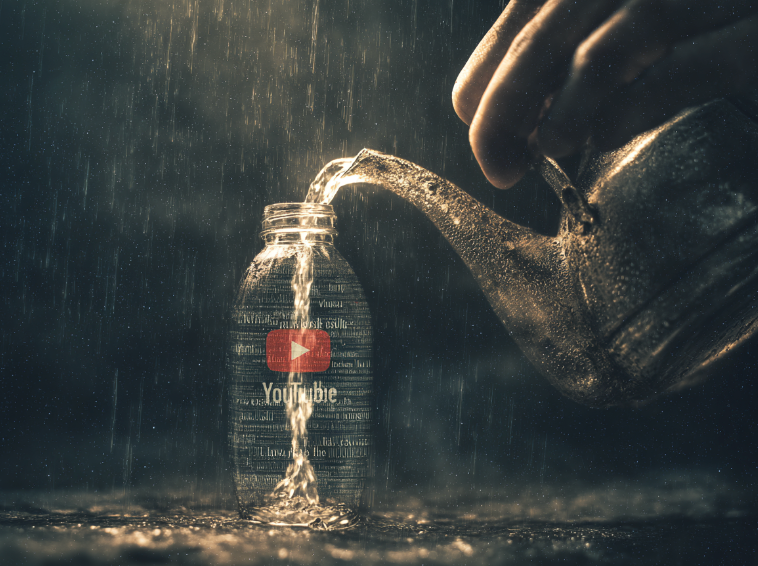
If we think of streaming media as “water,” or YouTube as a “vessel,” then all these videos are like water filling it up. But how do we observe these “drips”? Or, if streaming itself is already a form of “drip,” how should I look at this from a broader perspective?
YouTube as a “vessel”
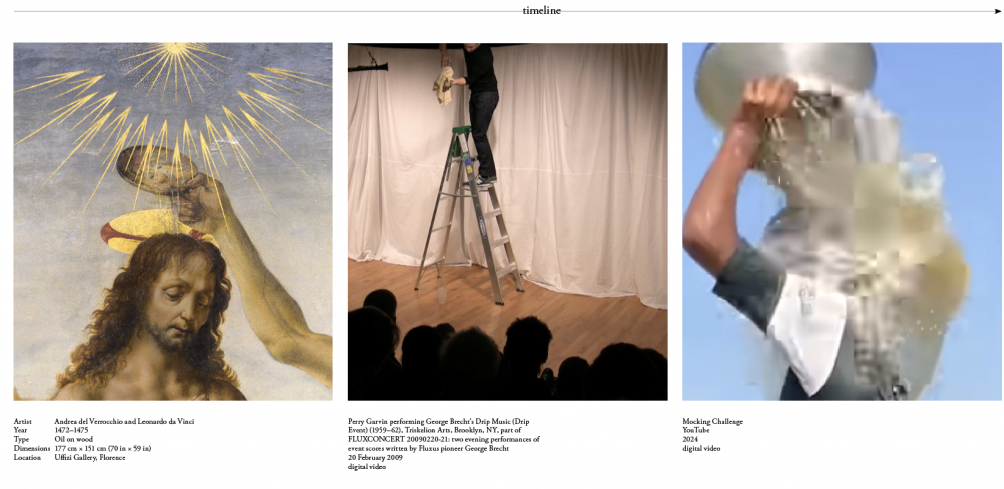
With this in mind, I first carried out extensive research, gathering materials spanning from the various versions of drip music dating back to 1959 all the way to the present. At the same time, I also looked further back in time at “drip music” as it appears in traditional classical oil painting. In the classical art era, “drip music” functioned as a kind of framed visual meditation: for example, the purifying rhythm of holy water pouring from a shell in Giovanni Bellini’s The Baptism of Christ, or the splashes of a storm in Peter Paul Rubens’s The Fall of Phaeton. These “drips,” fixed by painters onto the canvas, symbolized the irreversible forces of the sacred, of emotion, or of nature, yet remained confined within elite narratives and static forms—art was a “controlled flow”; drip was a symbolic tool; water was a divine medium; the vessel was the frame itself; and music was an emphasis on order and the sublime.
With the advent of postmodernism, Brecht’s Drip Music reinterpreted these definitions: “drip” is no longer a visual symbol, but any action that occurs passively; “water” expands from a physical liquid to the flow of time or concepts; “vessel” shifts from container to open framework, capable of holding infinite variations; and “music” transcends sound to become “the resonance of all possibilities.” Fluxus transforms the classical, rigid “drip” into a playful event, blurring the lines between elite and everyday life, inviting reinterpretation, and thus building a bridge to the present day: how can we articulate a modernized “Drip Music” through Fluxus ideas? Here, I have infused postmodern openness into the digital ecology and explored it in depth.
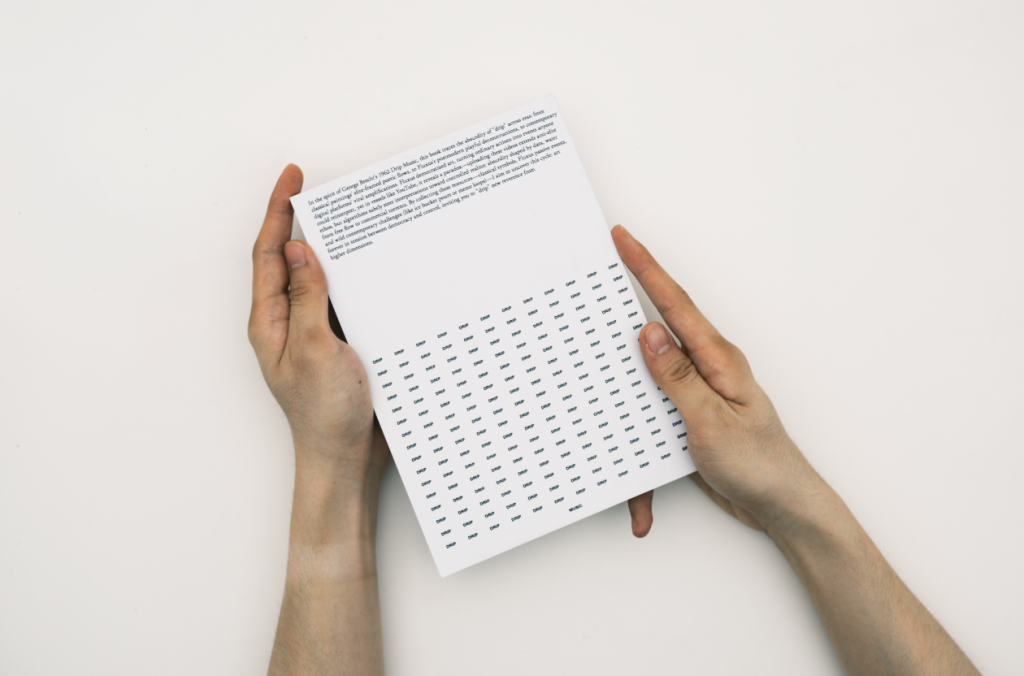
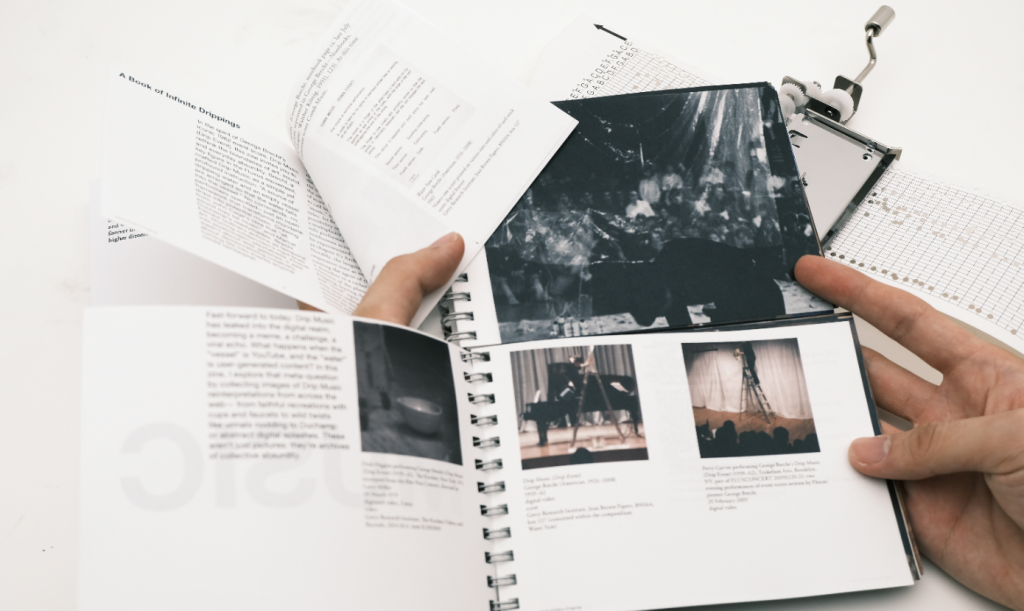
Accordingly, I have designed a small book that collects all the images of Drip Music I have gathered so far from different eras. At the same time, I have created a video and a piece of music—a remix of Drip Music composed from the various Drip Music works I collected.
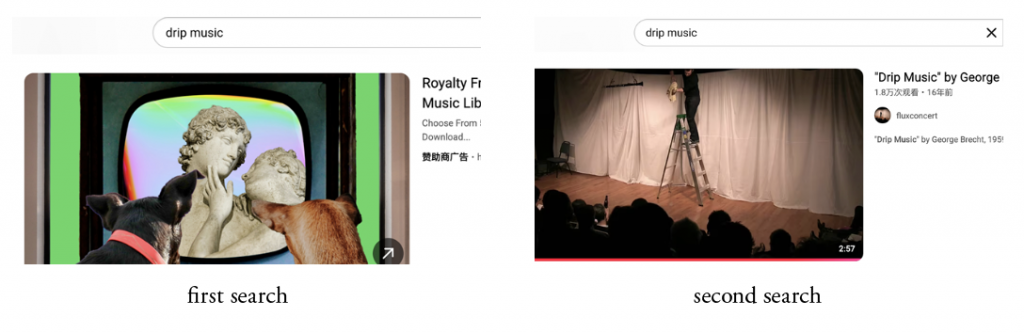
Interestingly, when I search for “drip music,” the algorithm pushes different versions of drip music to me based on my preferences. You can see that the results from my first, second, and third searches are all different: they go from initially recommending K-pop music, to shifting toward performance art appreciation, and then turning into all kinds of parody videos. Here, the algorithm keeps enclosing me within a certain framework, constantly tailoring it to my personal tastes.
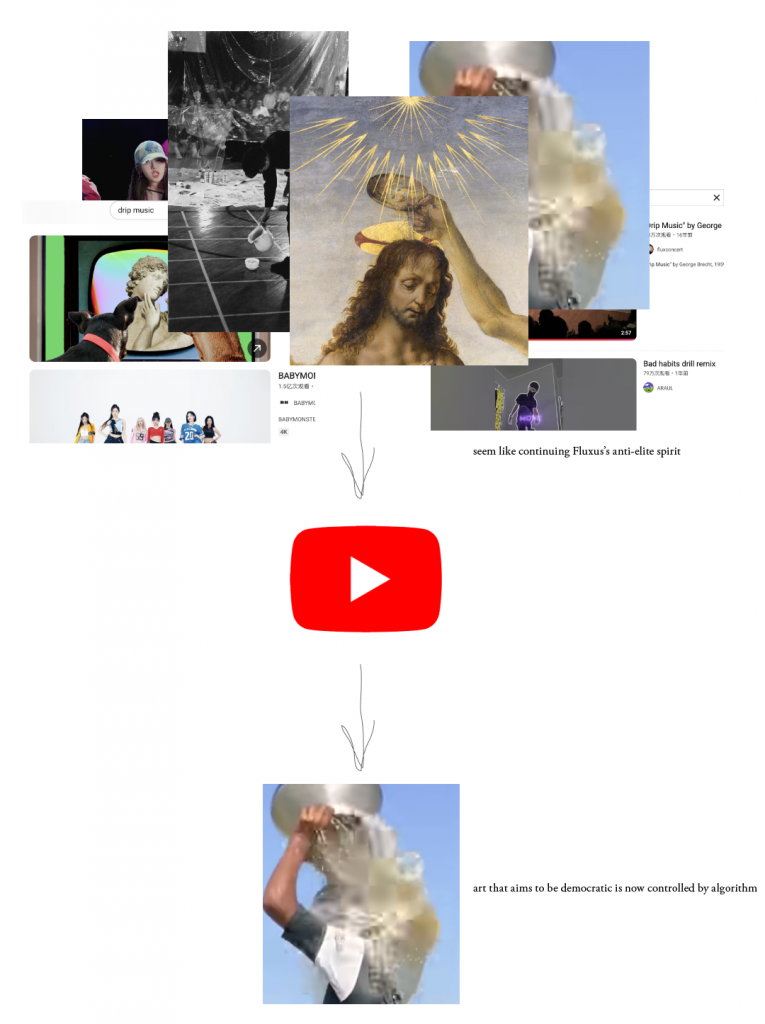
In the era of contemporary art, this framework has been magnified to an extreme: posting those “Drip Music” videos seems to carry on Fluxus’s anti-elitist spirit, yet it exposes the paradox of digital platforms—art slides from democratization into algorithmic control. If we think of YouTube as a container, and all videos (whether faithful recreations or over-the-top parodies) as the water that fills it, then how are they “dripped out”? Perhaps through random recommendations or precision targeting.
This is why I juxtapose the classical drip with today’s “funny drips.” These contemporary variants—apparently vulgar, yet as democratic as Fluxus events—redefine drip as a cultural meme, water as data flow, the vessel as the global network, and music as viral resonance, questioning every boundary; and yet the “democracy” here is a manipulated one.
The algorithm is not a neutral container but a “vessel” with preferences: it decides, based on click-through rates, watch time, and advertising value, which “drip” gets amplified and which is buried. For example, a video that tries to faithfully recreate Brecht’s quiet “Drip Music” may be ignored by the algorithm for lacking “funny” elements; by contrast, an extreme variant in the style of the Ice Bucket Challenge will be pushed to go viral. But this usually serves the platform’s commercial logic, within which art becomes “controllable”; Fluxus’s anti-elitism is “co-opted” by digital capitalism. Art’s slide from democratization into a controlled sphere does not mean a return to the past; rather, it marks an entry into a new dimension—a pseudo-democratic “algorithmic elitism.”
However, I don’t see this paradox as a regression, but as the cyclical nature of artistic evolution—a Fluxus-style escalation of absurdity. In the classical era, the drip was confined to the canvas, controlled by an elite of painters; in the postmodern Fluxus era, that control was broken and the drip was released into everyday life; in the contemporary era, it appears to be liberated, yet is once again fenced in by algorithms. Does this mean that the interpretation of art is “returning to a controllable domain”? Yes, but it is not a step backward; it is a shift in dimension: control has moved from explicit to implicit, and has expanded from the local to the global. We cannot help but regard this paradox with awe, because it reveals that art always exists in a state of tension: democratization is invariably accompanied by new forms of control. Yet just as water always finds a new container, drip music will magnify the absurdity of Fluxus to a point of genuine awe.
After that, I created a new book and cut it in half down the middle. Thanks to this binding method, all the streaming images became “water,” and readers can freely combine the “drips” and “vessels,” allowing us to become containers for endless content, thereby forming all kinds of drip music. Through this format, I also explored the question of control within democratized forms: it appears that readers can freely combine drip music, but in fact they can only operate within the parameters I have set.
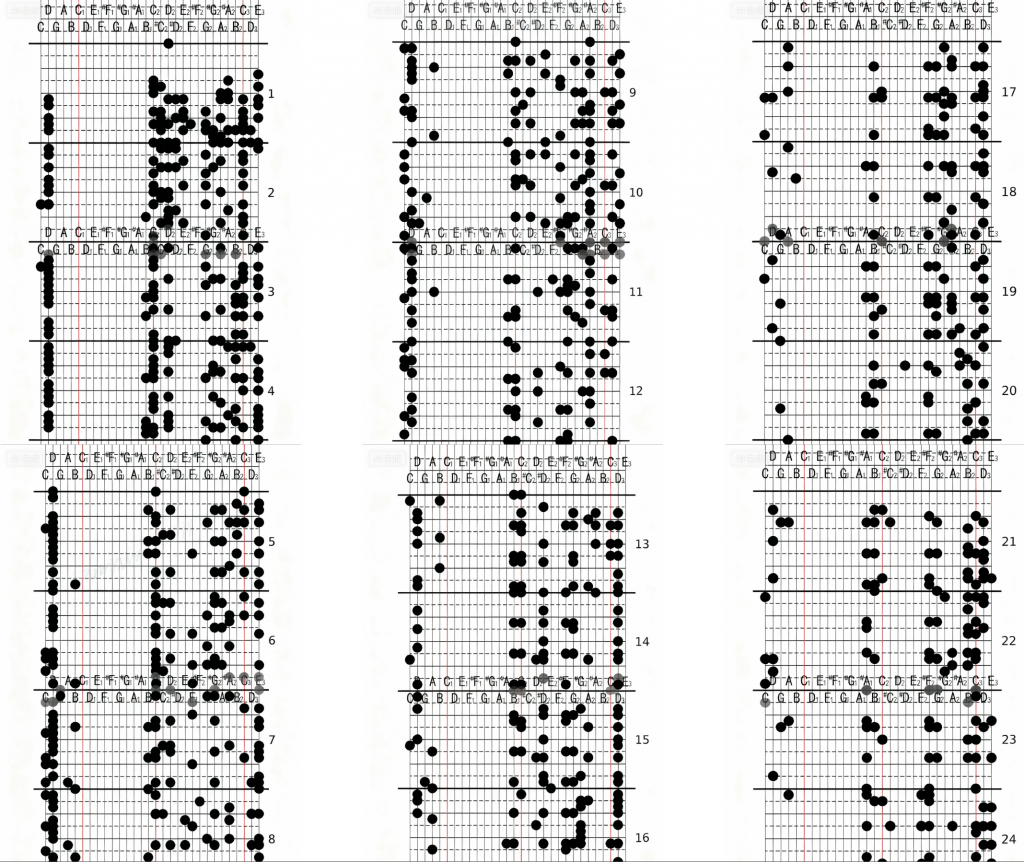
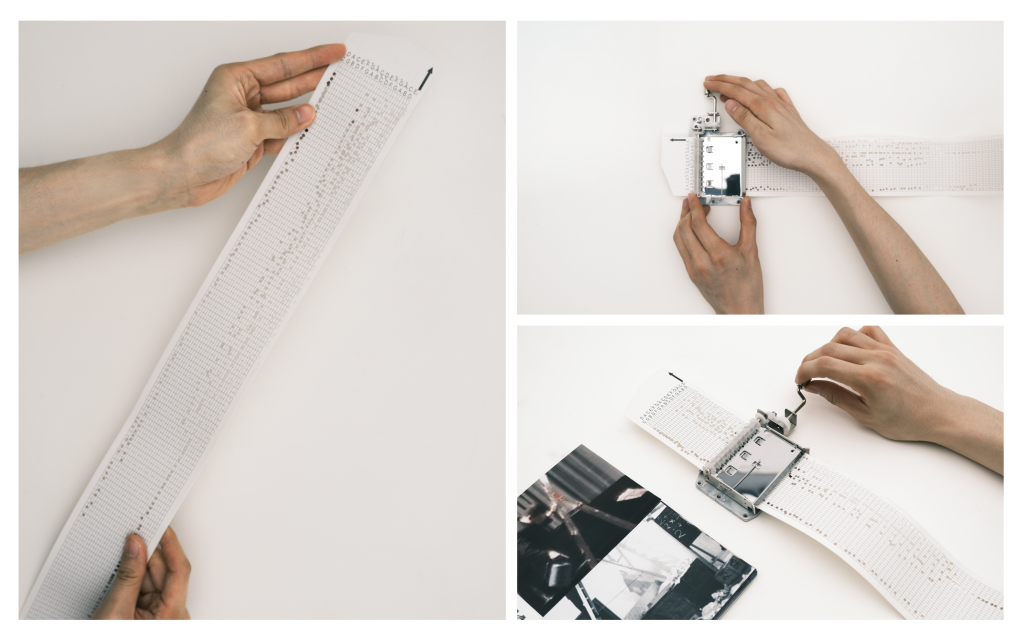
After this, I re-transcribed the audio I had previously made, turning it into a true musical score—a complete collection of drip music—and printed it onto staff paper. In this way, on the page, readers can very intuitively see and hear this music.
By casually mixing and matching these musical pairings, I began to think: are they still “Drip Music”? Does this kind of recombination create a new “event”? I believe that perhaps this is for each individual to decide. Within this hybrid of true Fluxus spirit and contemporary styles, I think what I hope to do is invite readers into this absurd summons and have them dive into it.