PROMPT
In this written response you’ll explore how your writing can advance over time, through subsequent drafts, in response to—or in parallel with—the development of your studio practice.
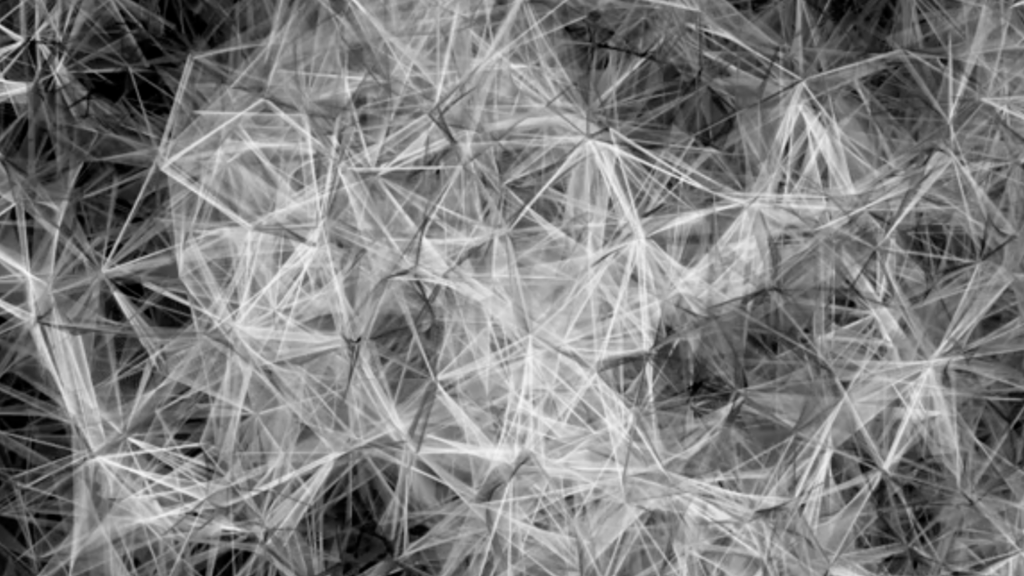
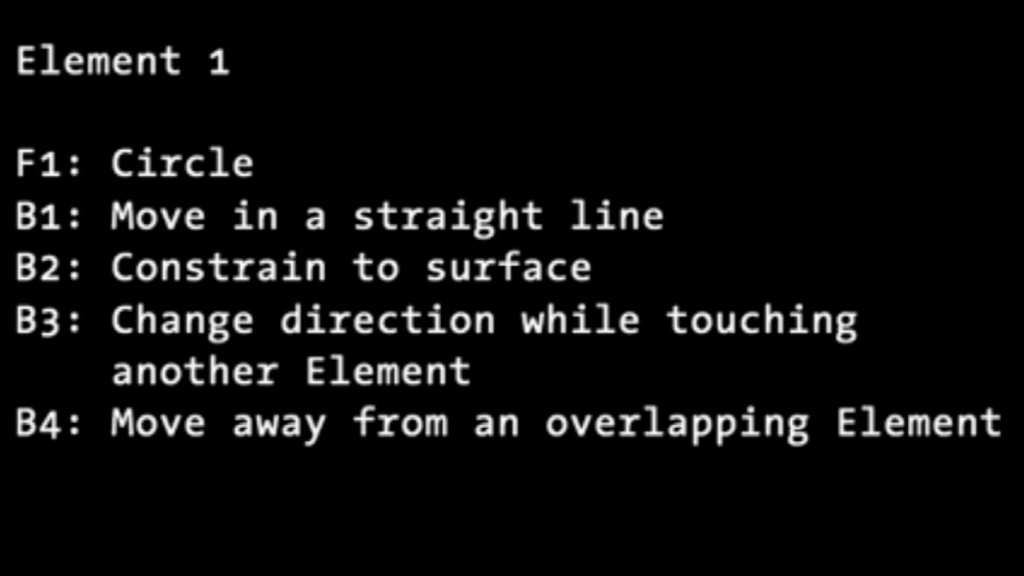
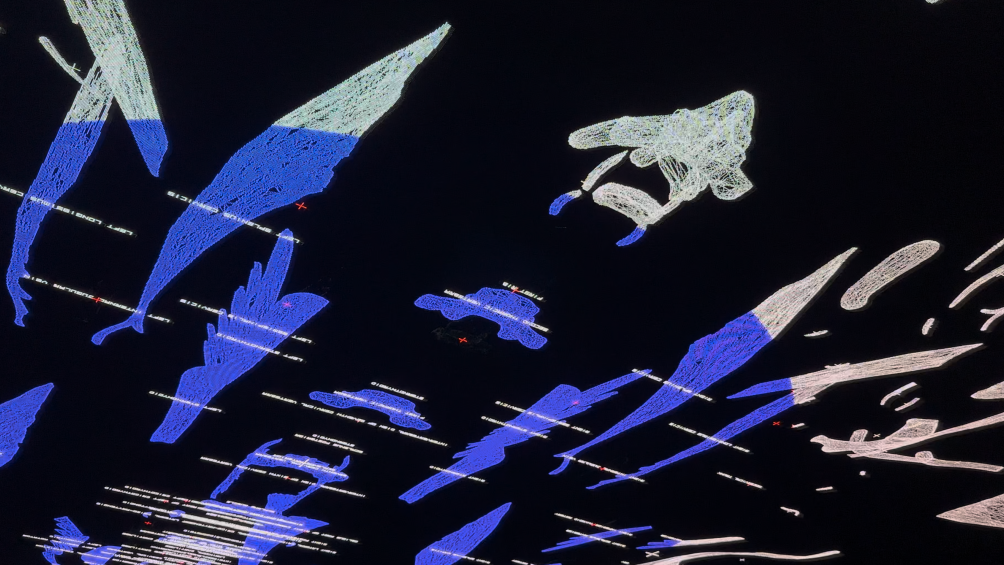
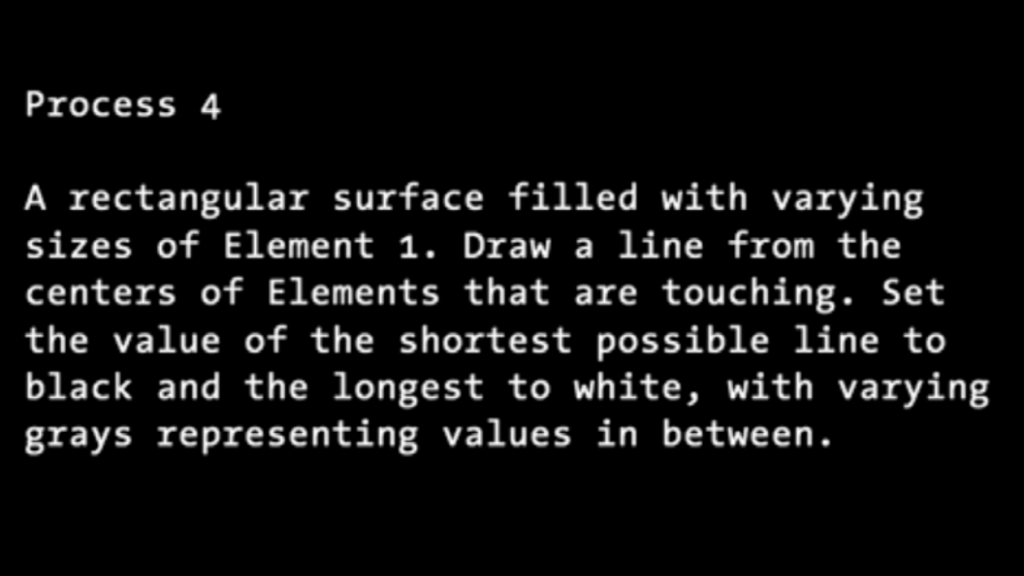
My iterative inquiry began with a replication of Process 4 by Casey Reas. During the refactoring of Reas’s Element 1 system (Form 1 + Behavior 1 + Behavior 2 + Behavior 3 + Behavior 4), I engaged with the fundamental concept of emergence: how complex visual patterns can arise from simple, local interactions. However, while Reas’s work focuses on organic, almost biological accumulation, my subsequent iterations sought a different aesthetic and logical direction, heavily influenced by the aesthetics of Ryoji Ikeda. I began to question how the “Process” itself could be visualized not just as a drawing tool, but as a living, decaying digital ecosystem.
https://vimeo.com/39078622
To analyze this shift, I refer to the Conditional Design Manifesto, which states: “The process is the product. … Logic is our tool” (Maurer et al., 2013). This perspective provided a critical lens for my project’s evolution. Initially, I acted as a traditional composer, dictating the visual output. However, by adopting the ethos of Conditional Design Workbook (Maurer et al., 2013), I transitioned into a “system designer.” I used dynamic logical conditions, combined with Casey Reas’s Element 1 code setting theory, to define the rules for “Decay” and “Reset” in my code, thereby replacing static drawing instructions.
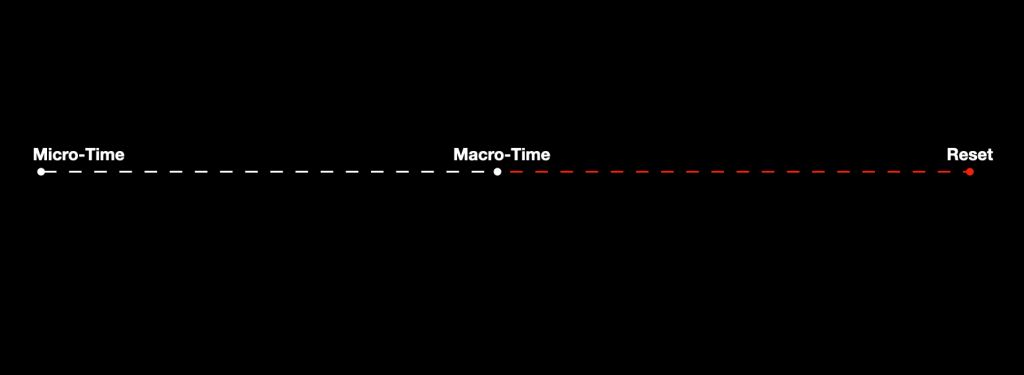
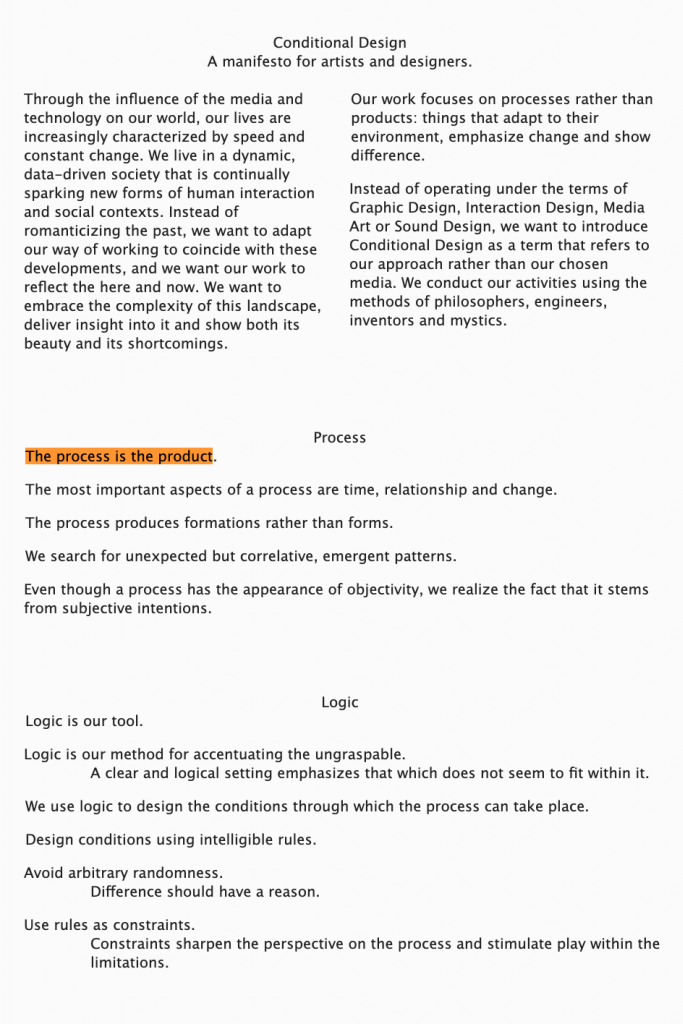
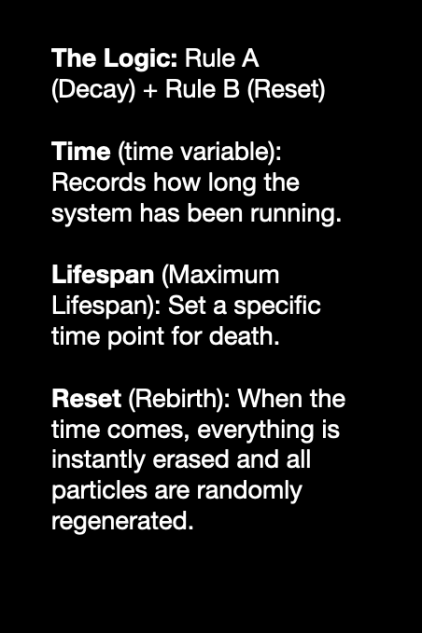
In my current web based iteration, the visual output is no longer a fixed composition but a fleeting result of these conditional rules. Similar to how Ikeda visualizes the invisible flux of data, my system uses high contrast, glitch inspired visuals to represent the lifespan of digital information. The logic is explicit: if an agent’s life exceeds a threshold, it decays; if the system reaches entropy, it resets. This aligns with Conditional Design Manifesto assertion that “Logic is our method for accentuating the ungraspable.”
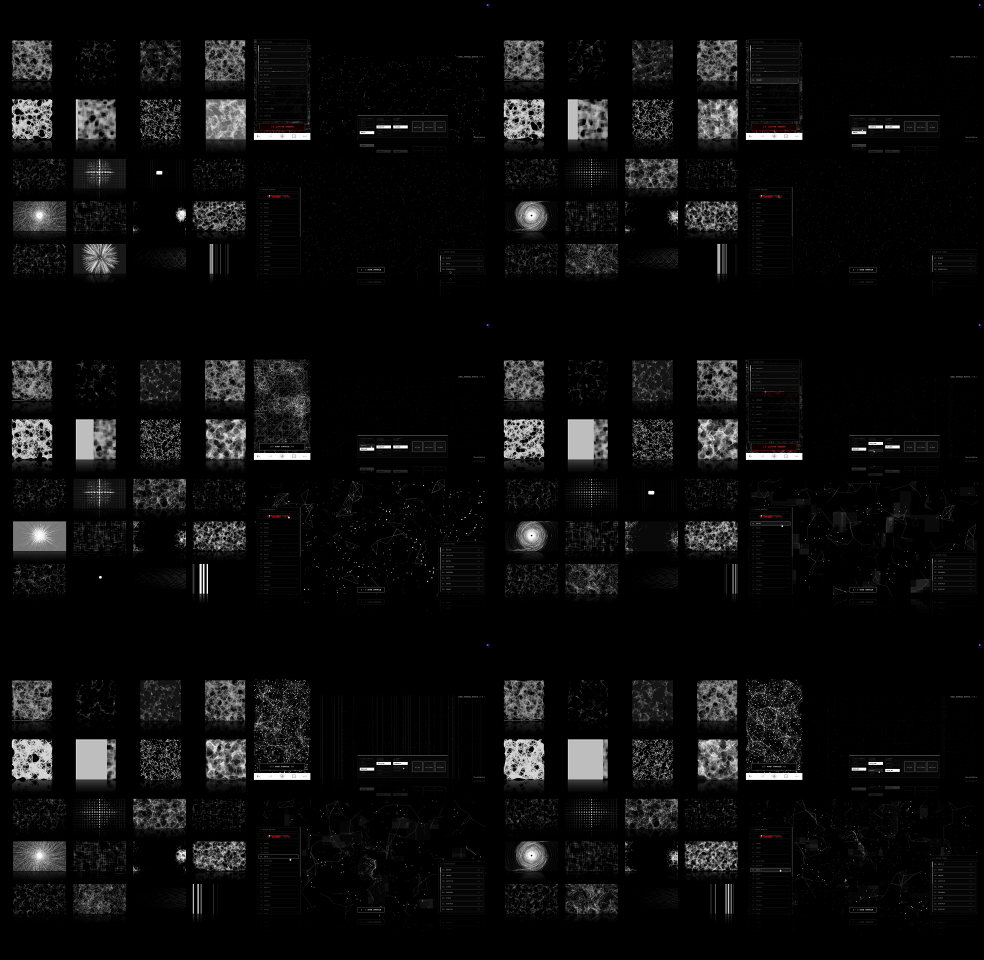
Ultimately, my practice has moved beyond the mere visual mimicry of Reas. By integrating the rigorous logic of Conditional Design Manifesto with Ikeda’s visual intensity, the project has evolved into a tool that does not just display data, but simulates its existence. The writing and the code now advance in parallel, documenting a shift from creating an image to curating a system of infinite, conditional possibilities.
Watch the video:
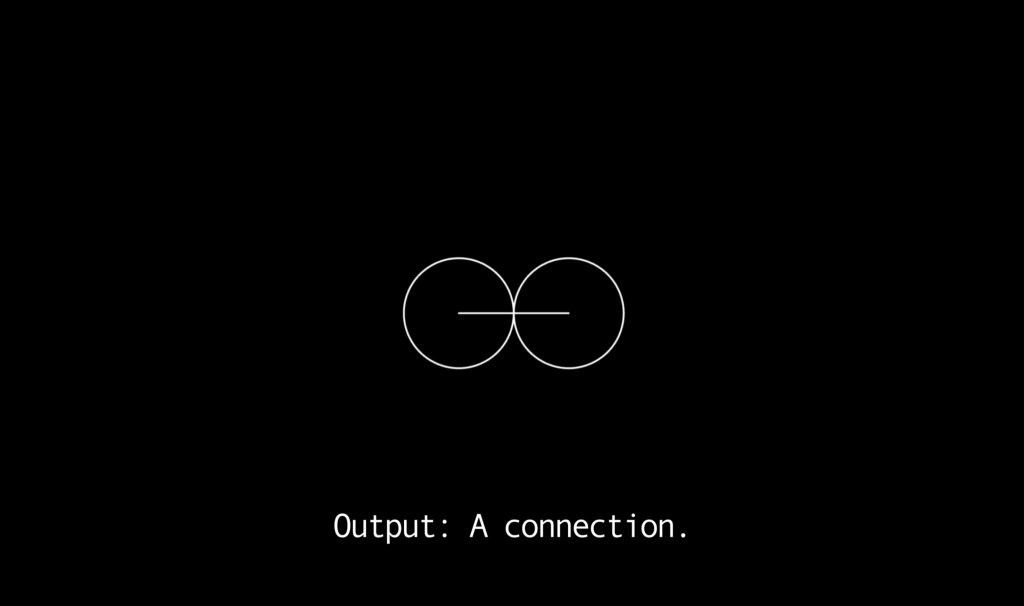
https://youtu.be/f32QNX2Qjys
Reference list:
Ikeda, R. (2010). Digital Art. World Policy Journal, 27(3), pp.38–39. doi:https://doi.org/10.1162/wopj.2010.27.3.38.
Maurer, L., Edo Paulus, Puckey, J. and Roel Wouters (2013). Conditional design workbook. Amsterdam: Valiz.
Reas, C. (2019). CASEY REAS : making pictures with generative adversarial networks. S.L.: Anteism Books.
Draft 1 – Jan 23
My replication of Casey Reas’s Process 4 was essentially an act of translation—converting Reas’s abstract semantic instructions (Forms and Behaviors) into precise, conditional code within Processing. By iteratively analyzing Reas’s rules, I systematically constructed the system logic: establishing “Element 1” as an autonomous agent, defining its spatial boundaries, and scripting the conditional logic necessary to replicate the work.
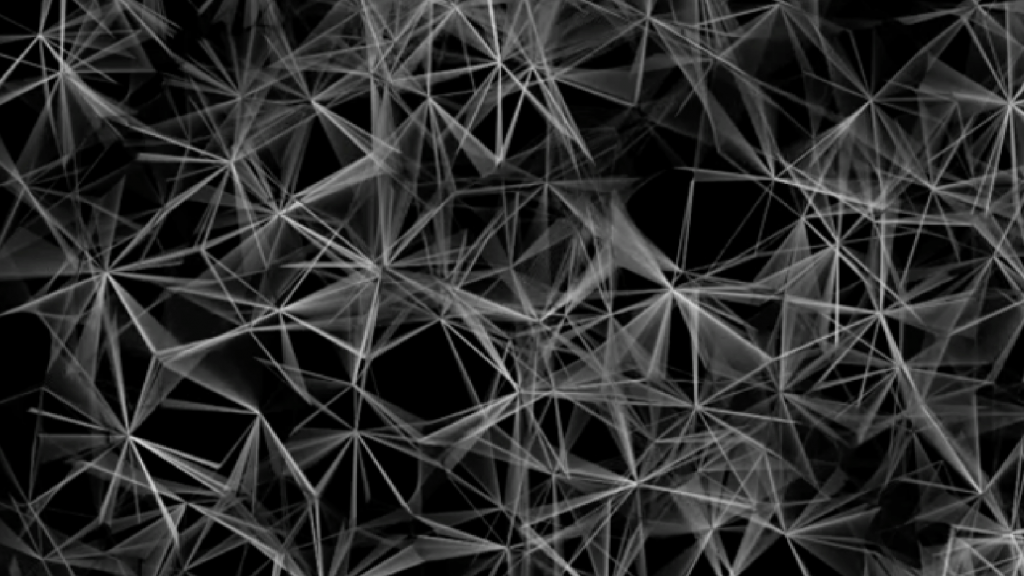
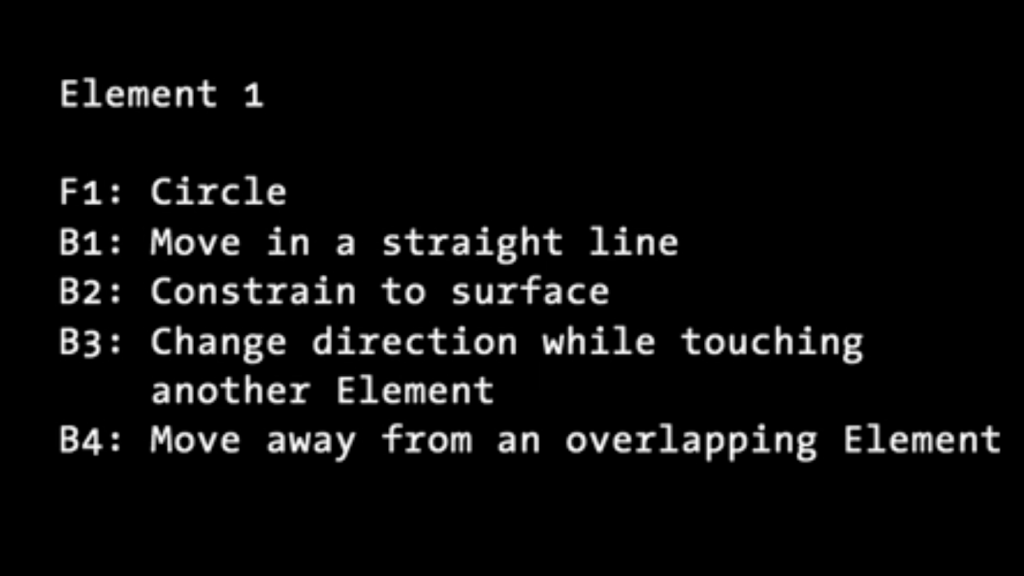
Through multiple iterations of code refinement, the system evolved from a rigid collision detection—strictly following the initial rules—to a “magnetic” force field, alongside the calibration of low-opacity accumulation effects.
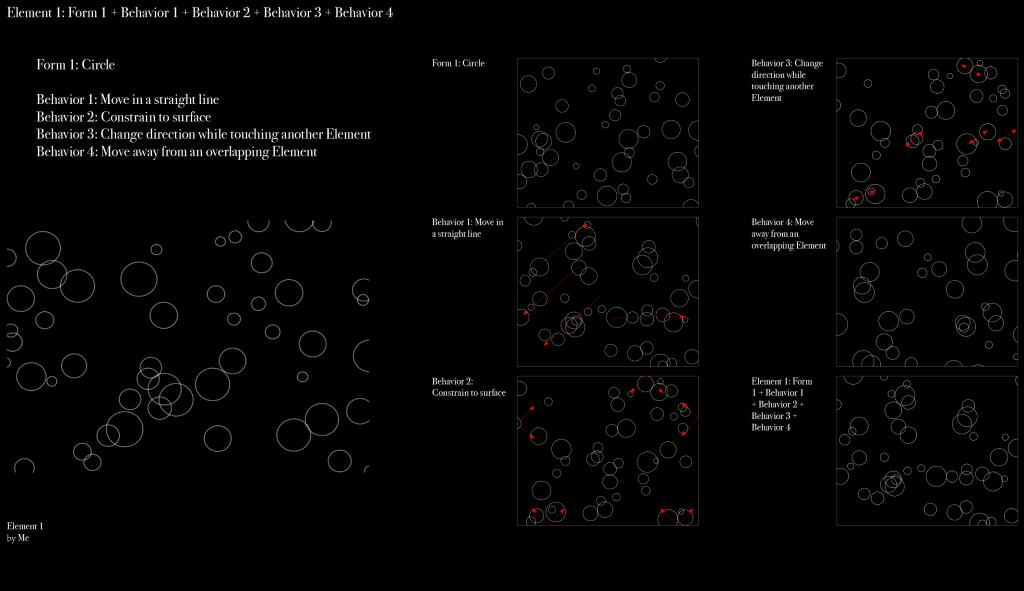
How does the strict precision of binary code generate an illusion of organic ambiguity? This project’s process of emulation reveals that the essence lies not just within the rules themselves, but in the constantly shifting data; it is these iterations that allow stiff geometric shapes to dissolve into fluid, organic textures.
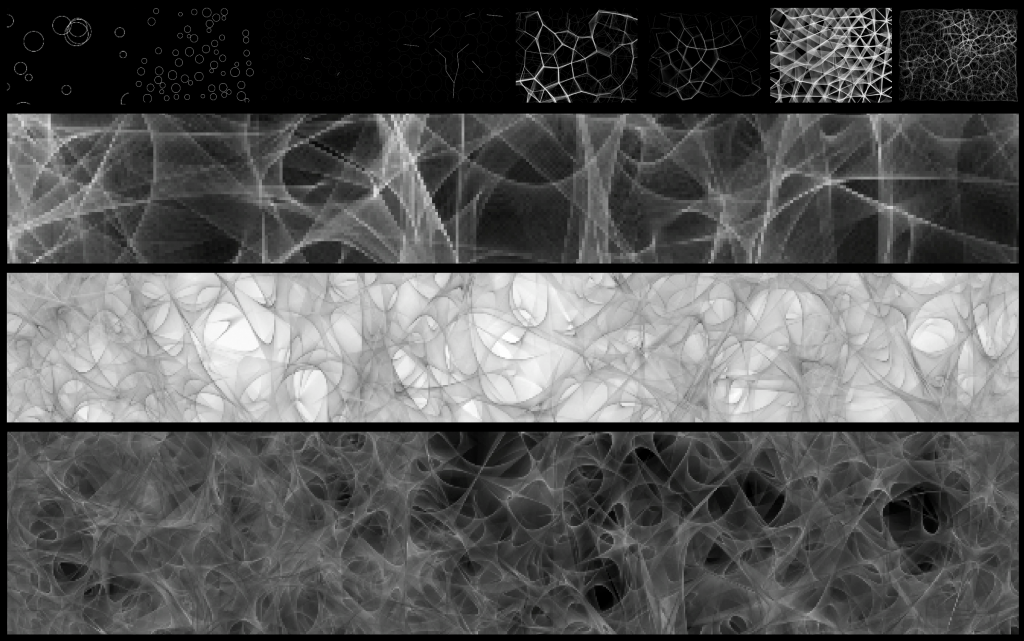
Studio-based experiment
I want to explore “forgetting” as a generative mechanism. The current Process 4 is an infinite accumulation that eventually leads to total saturation. I intend to modify the drawing rule by introducing a “lifespan” variable. Once drawn, connections will gradually fade in opacity until they vanish. This will create a display that is distinct at every moment and never fully saturated. This shift moves the focus from the “final outcome” to the “current dynamic,” simulating the biological process of memory and forgetting in neural networks.
Draft 2 – Jan 30
Viewing my replication and subsequent evolution of Casey Reas’s Process 4 through the lens of the Conditional Design Manifesto (Maurer et al., 2013), the project shifts from a mere technical act of translation into an exploration of algorithmic performativity. The workbook asserts a core philosophy:”Our work focuses on processes rather than products.” This perspective reframes my engagement with Reas’s Forms and Behaviors. I was not simply converting semantic instructions into syntax; I was designing the conditions, the underlying logic: under which an autonomous system could perform, mutate, and evolve.
The workbook states that “Logic is our tool.” In my initial phase, I constructed the system logic by establishing “Element 1” as an agent defined by strict spatial boundaries. However, as the project evolved from rigid collision detection to a “magnets” force field, the nature of these conditions changed. I moved beyond static rule-following to dynamic interaction. By altering the specific logic of the lines: changing their proximity thresholds and opacity accumulation, I made the system to generate output that was predictable in its rules but unpredictable in its specific manifestation. This aligns with the workbook’s concept for the “unpredictability” that emerges from defined constraints.
Crucially, the introduction of a “lifespan” and the “2 roads manner” visual strategy demonstrates the workbook’s claim that “the process is the product.”
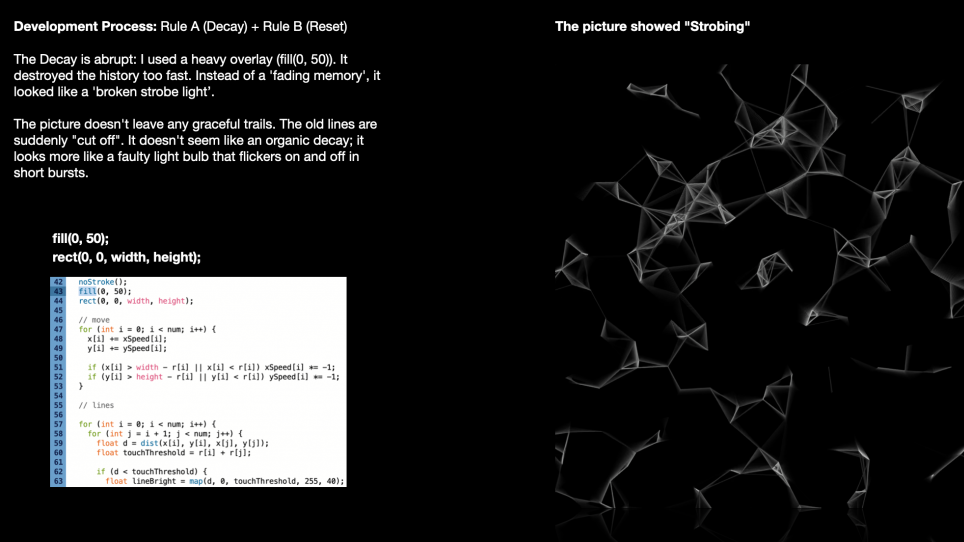
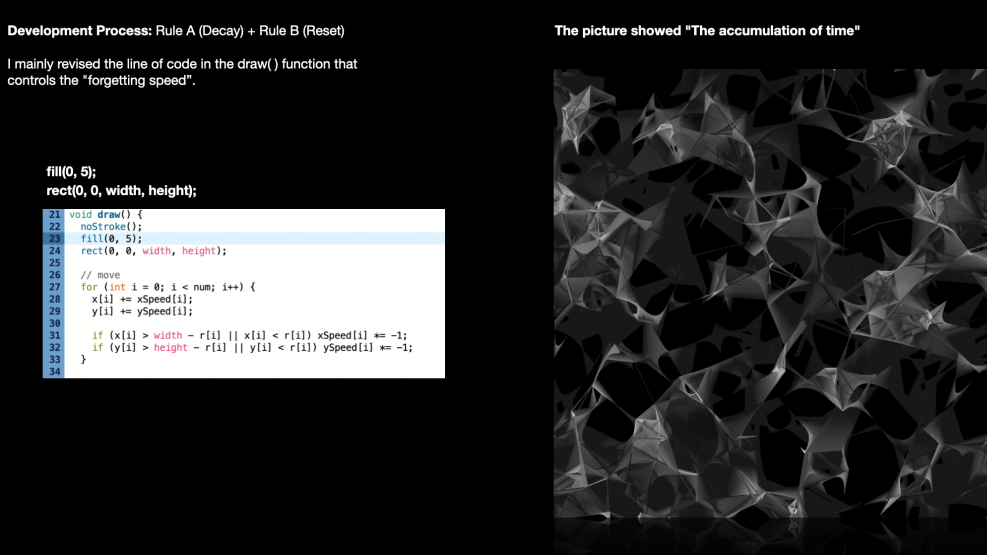
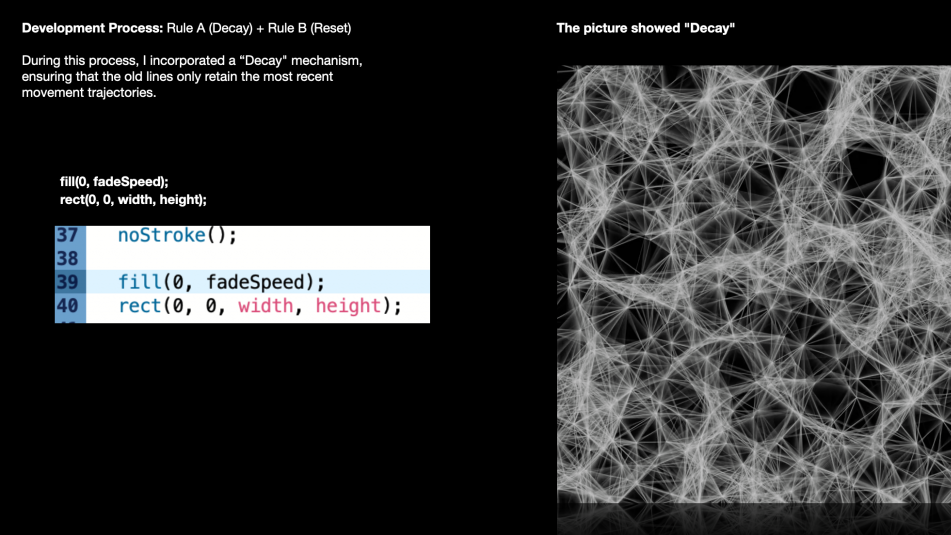
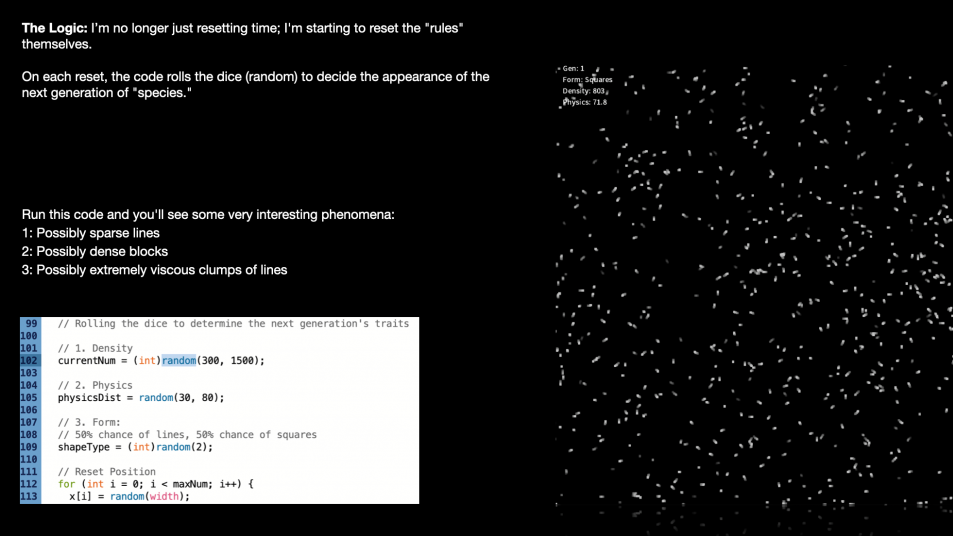
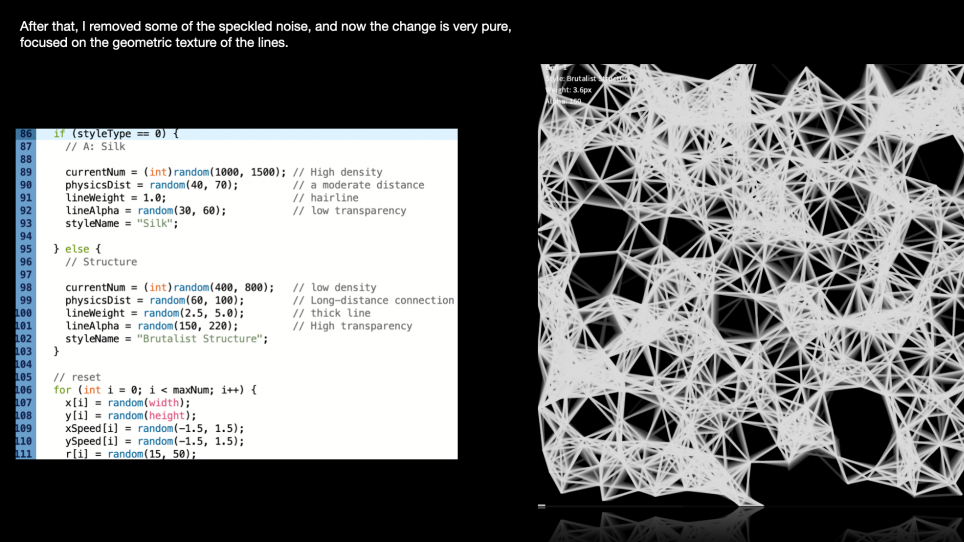
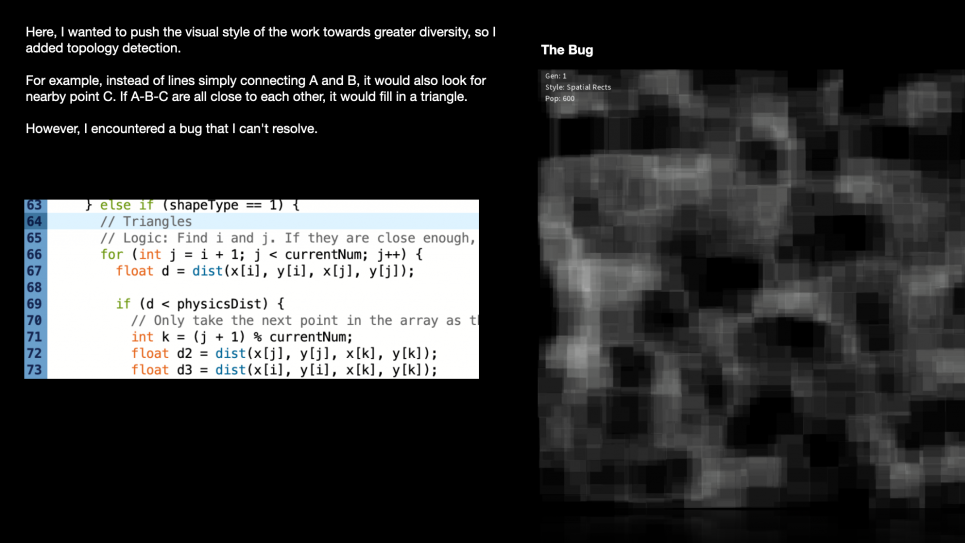
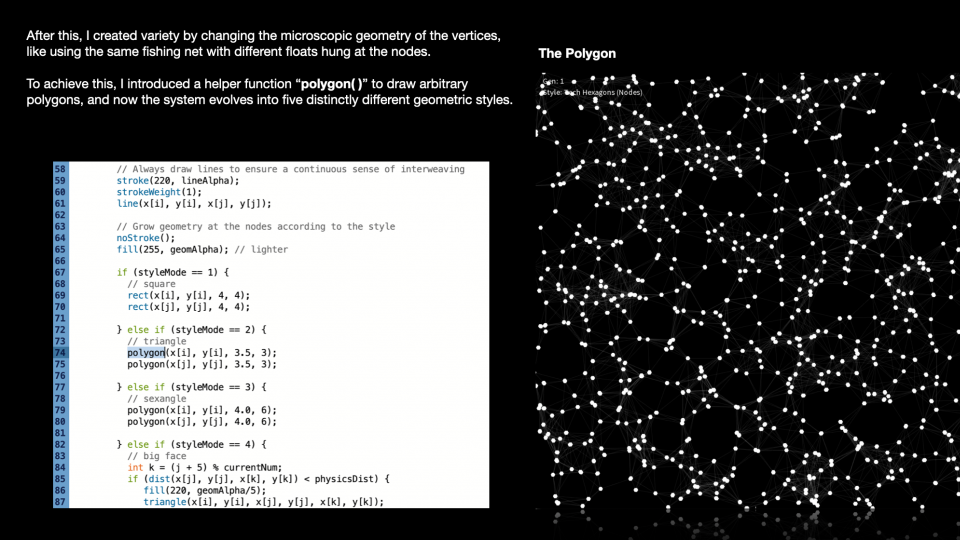
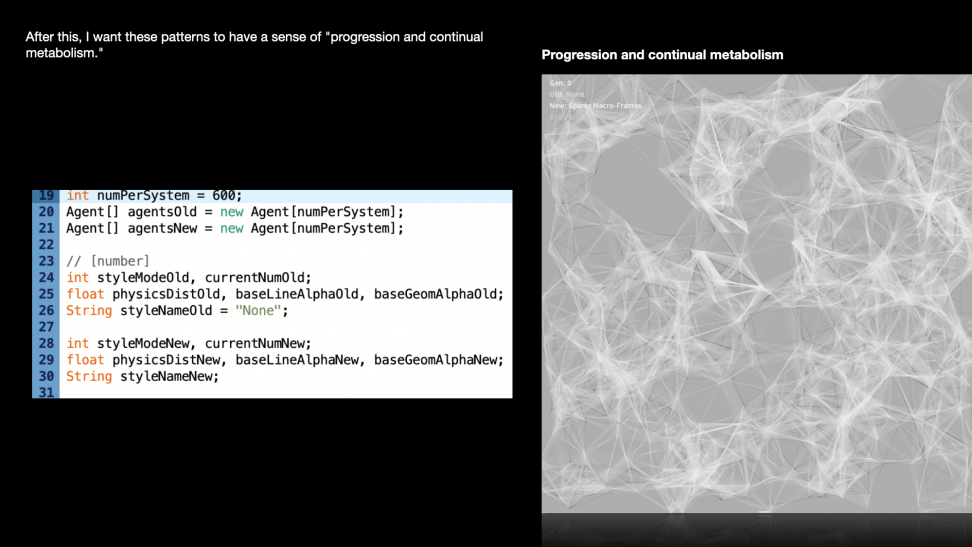
In my final iterations, the artwork is not a single static frame, but a continuous stream of birth, accumulation, dissipation, and rebirth. The code does not just draw a picture; it enacts a lifespan. The “organic” I initially sought, is not an illusion created by graphical tricks, but a trace of time embedded in the logic. The fading trails and the overlapping lines serve as a visual archive of the process itself.
Therefore, the essence of this project lies not in the final image, but in the algorithmic conditions that allow the system to breathe.
Draft 3 – Feb 6
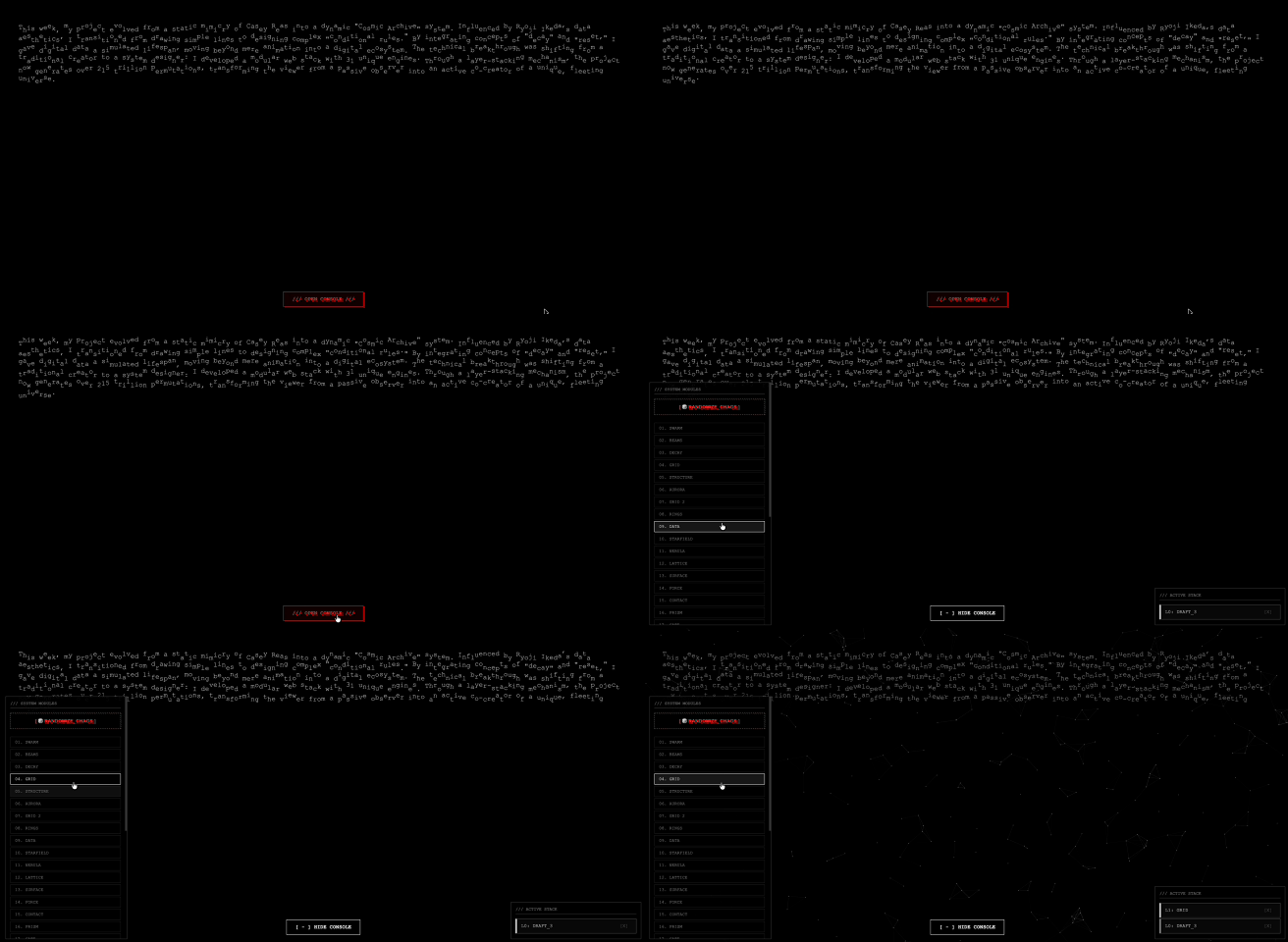
This week, my project evolved from a static mimicry of Casey Reas into a dynamic “Cosmic Archive” system.
Influenced by Ryoji Ikeda’s data aesthetics, I transitioned from drawing simple lines to designing complex “conditional rules.” By integrating concepts of “decay” and “reset,” I gave digital data a simulated lifespan, moving beyond mere animation into a digital ecosystem.
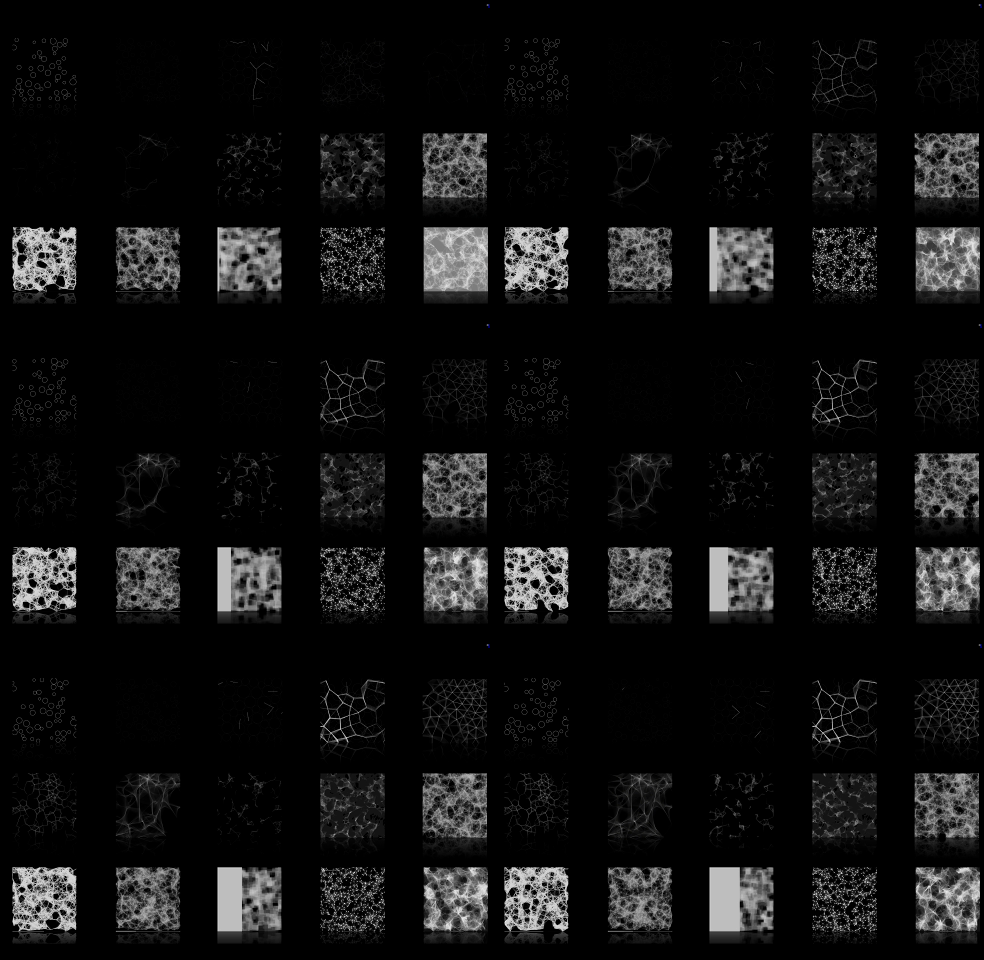
The technical breakthrough was shifting from a traditional creator to a system designer: I developed a modular web stack with 31 unique engines.
Through a layer-stacking mechanism, the project now generates over 215 trillion permutations, transforming the viewer from a passive observer into an active co-creator of a unique, fleeting universe.