Process notes
Week 01 measured change at the level of pixels. It could show that a copy differs from its source, but not where an image comes from, what surrounds it, or how its parts are arranged. In Week 02 I moved from the pixel to the archive, and started again from a single word: position.
One word, three meanings
The Cambridge Dictionary groups the senses of “position” into three: place (where something is), arrangement (how parts are placed) and opinion (what someone thinks). I searched the New York Public Library’s Digital Collections for “position”. The search turned a word into a selection of images, and from the results I chose one starting point for each meaning.
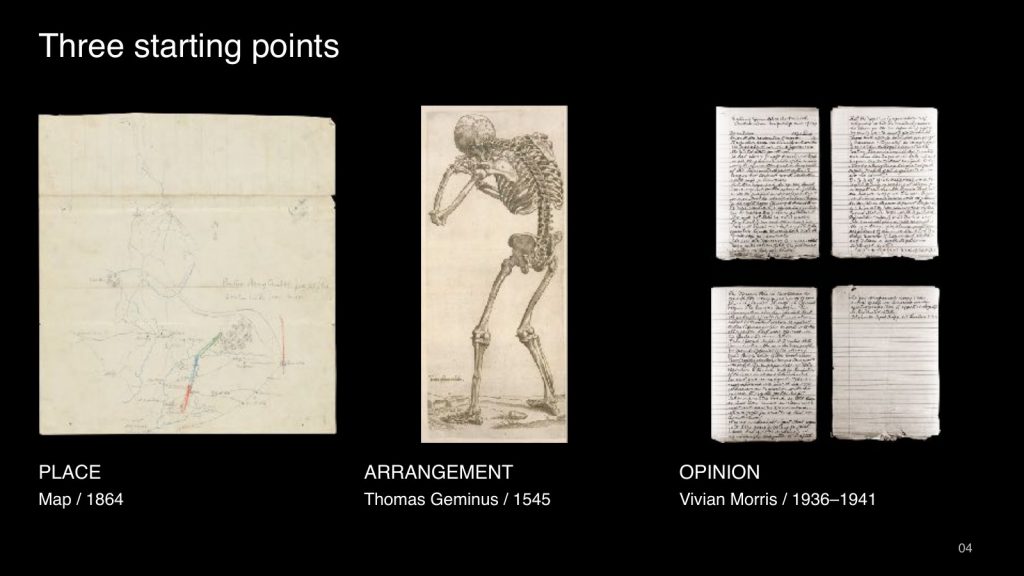
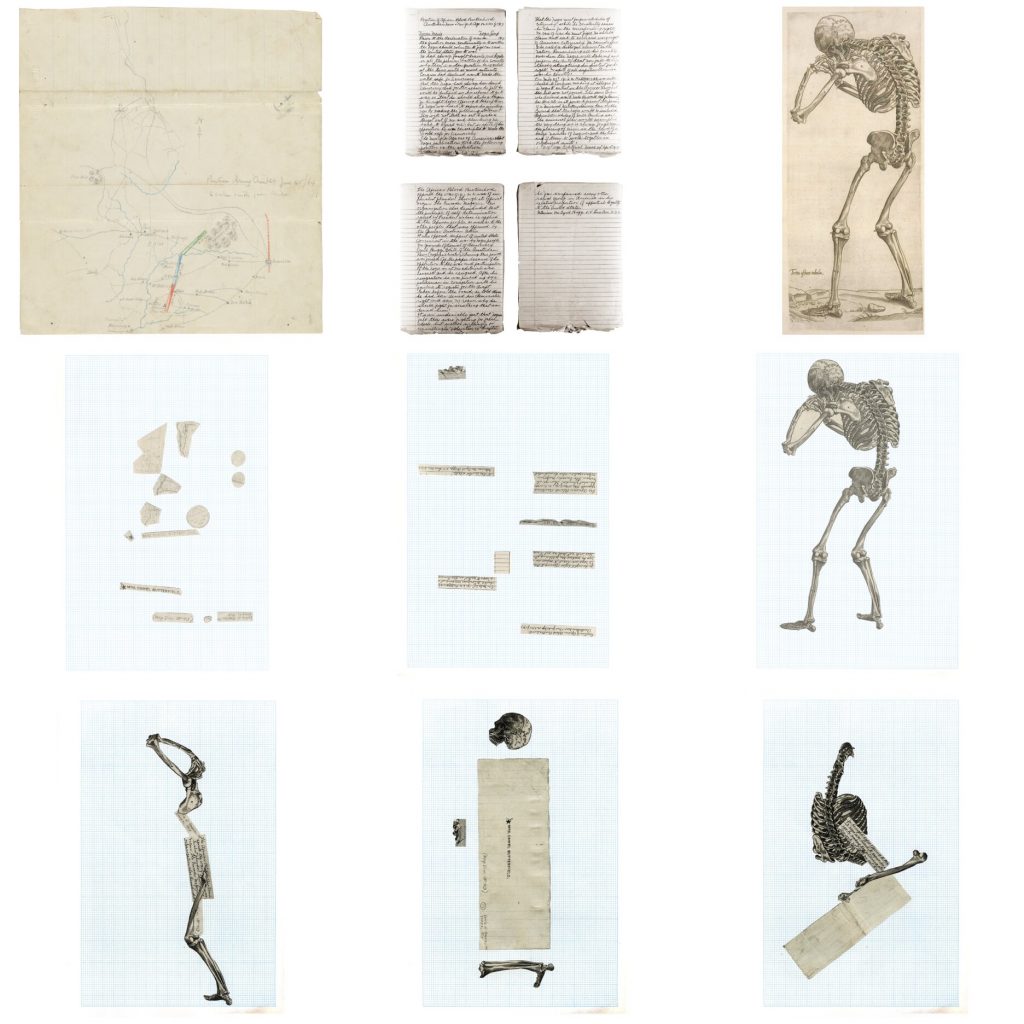
For place, a hand-drawn map from 1864. For arrangement, a skeleton plate from Thomas Geminus’s anatomical publication of 1545. For opinion, a handwritten text by Vivian Morris (1936–1941), in which a position is literally written out. The three images have nothing in common except the word that brought them together; that was the point. The search engine had already arranged them for me.
References
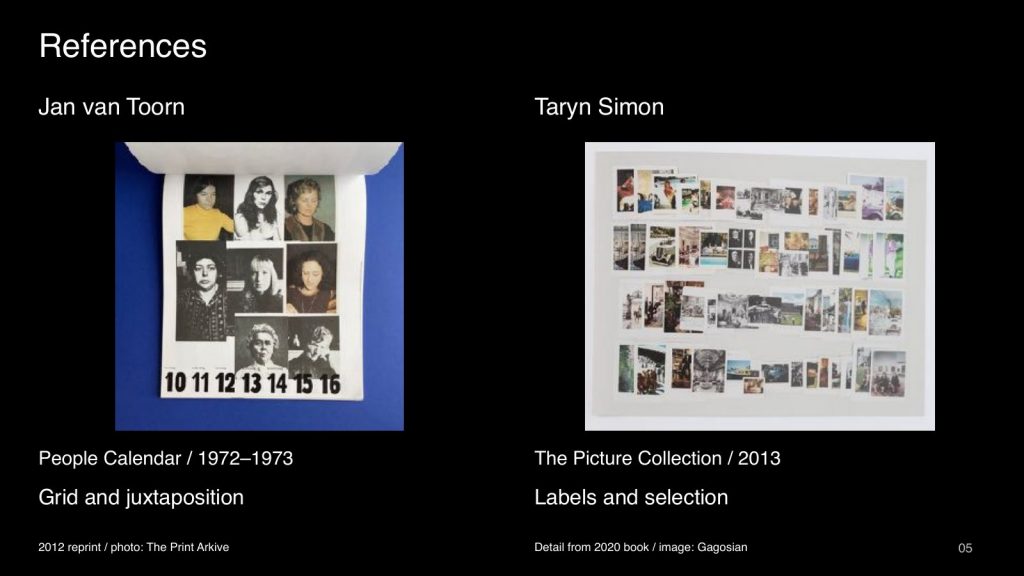
Two references framed the method. Jan van Toorn’s People Calendar (1972–1973) places images side by side in a grid, so that meaning comes from juxtaposition rather than from any single picture. Taryn Simon’s The Picture Collection (2013) photographs folders of images gathered under a single subject heading, showing how labels and selection decide what belongs together. Between them, they gave me two questions to work with: what happens when images share a grid, and what happens when a label decides the grouping?
01 / Archive
I printed the three complete images and placed them on a shared blue grid. The grid became important in two ways.
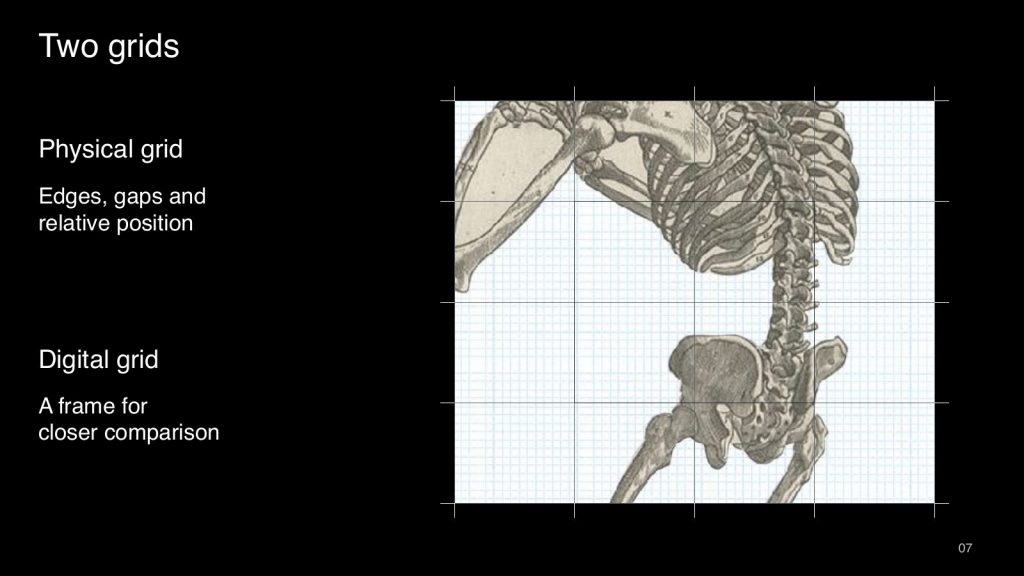
The physical grid of the graph paper records edges, gaps and relative position: once a fragment is cut out, its displacement can be read against the squares. The digital grid works as a frame for closer comparison when the scanned material is enlarged on screen. One measures the object; the other measures my view of it.
02 / Remove
I then cut each image, keeping three states side by side: the whole image, the remaining sheet and the removed parts.
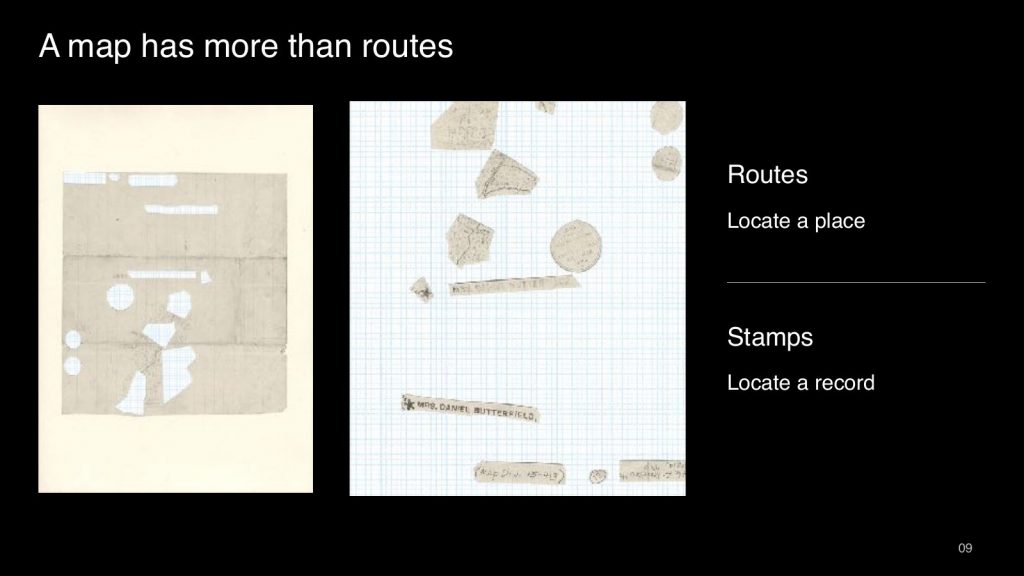
Cutting the map showed that it carries more than routes. The routes locate a place, but the stamps and catalogue marks — an owner’s name, a map division number — locate a record. When the drawing is removed, the archival apparatus is what remains on the grid: the map stops describing a landscape and starts describing its own life in a collection.
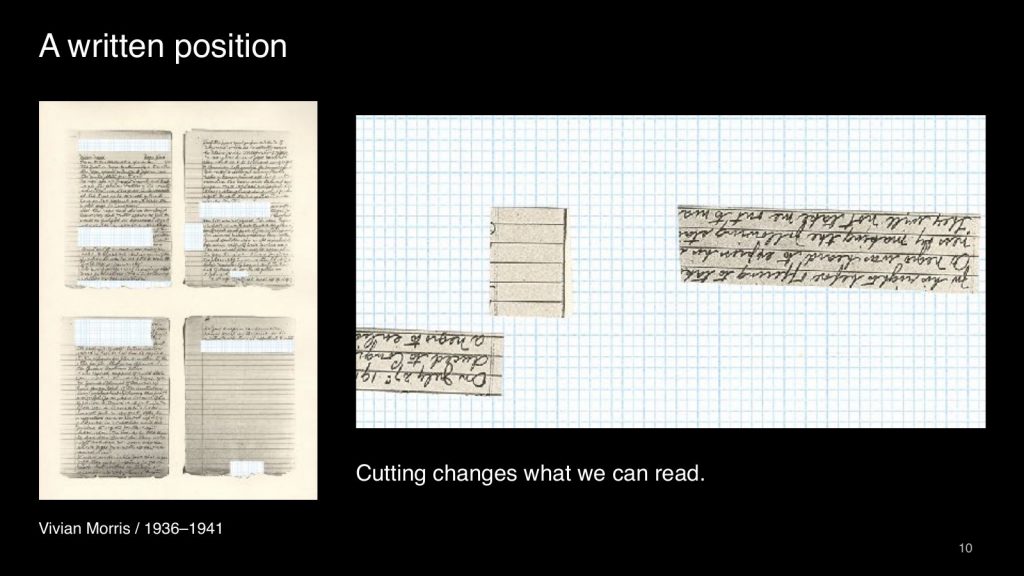
With Vivian Morris’s manuscript, cutting acted directly on meaning. Each strip keeps its handwriting, but separated from the lines around it, a sentence can no longer be followed as an argument. A written position becomes fragments of a position: cutting changes what we can read.
03 / Reassemble
Finally, I recombined fragments from the three meanings into new figures on the grid.
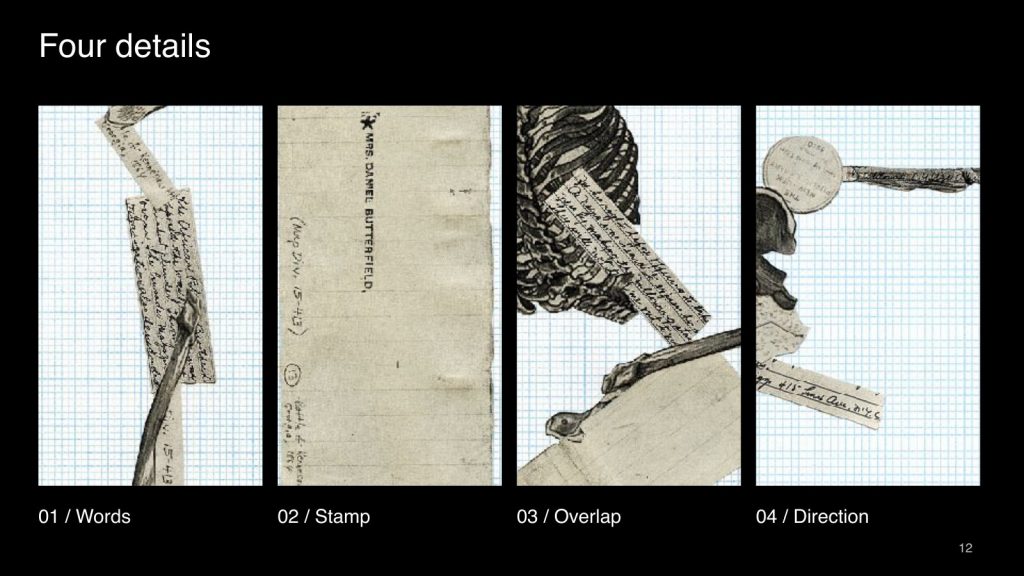
Four details show what reassembly does. Words: strips of manuscript laid along the skeleton’s limbs make the text read across the body, so the words become a connection between parts. Stamp: the archival label is placed inside the figure, so the record of where the image is kept becomes part of the composition. Overlap: text and bone cover each other, so neither can be read in full. Direction: a small rotation of one fragment changes the gesture of the whole figure.
A cut becomes a window
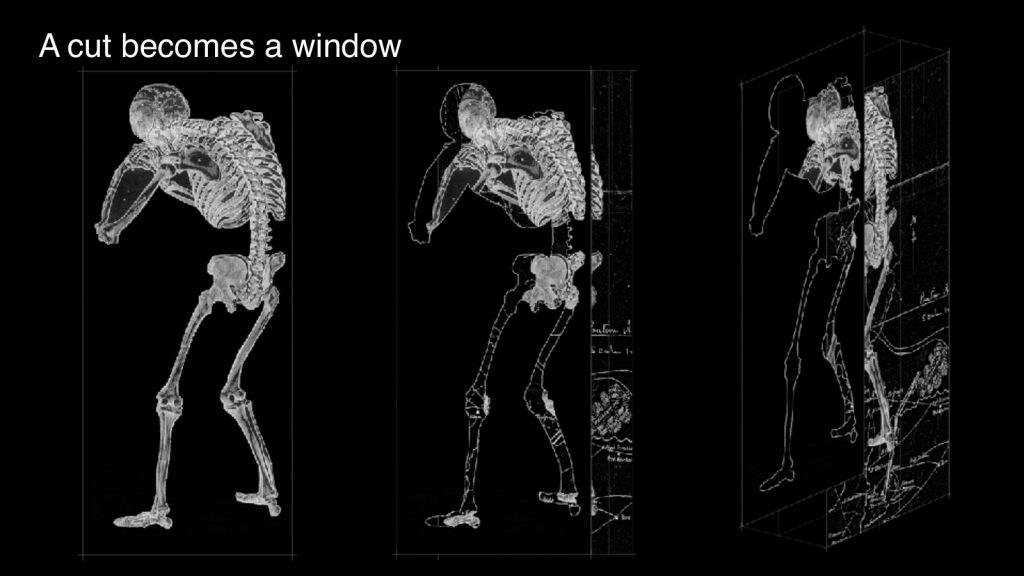
In the last study, the outline left by cutting the skeleton was used as a window: through the empty shape, other layers of the source material become visible. The hole is no longer an absence; it frames what lies behind it.
What lets us read a position?
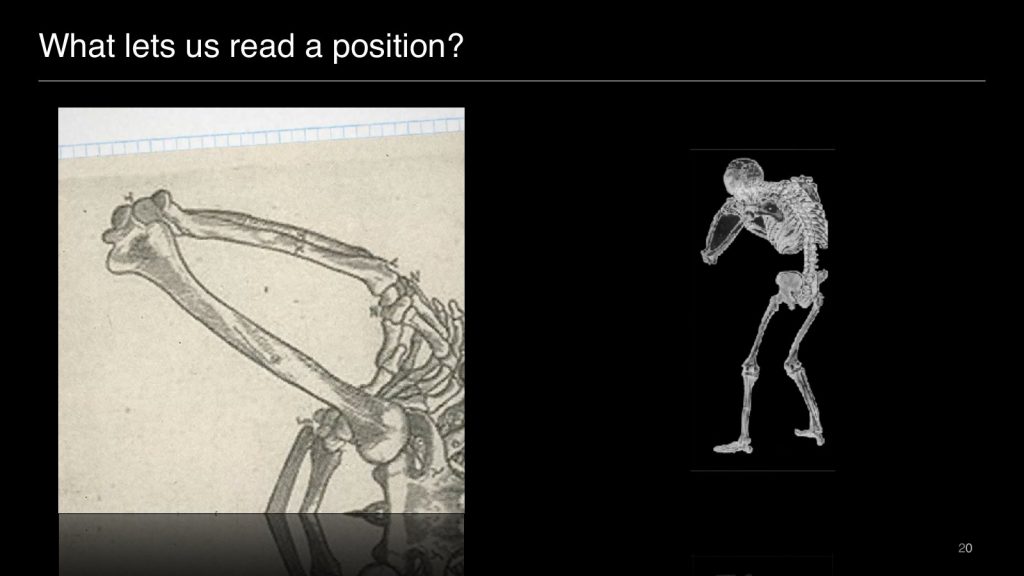
The week ended with this question. Each operation — archiving, removing, reassembling — showed that a position is not read from an image alone, but from the relations around it: the grid, the label, the neighbouring fragment, the direction of a cut. Of the three starting points, the anatomical figure held my attention most. How a body stands, what supports it and what surrounds it is the literal sense of how parts are placed. Following the Geminus plate back to its source led to Andreas Vesalius’s woodcuts of 1543, which became Week 03.